
5 Steps to Restore Skin Texture After Chemotherapy
Last Updated: October 24, 2026
Quick Summary
Skin texture after chemotherapy typically improves within one to three months with consistent, gentle care focused on hydration and barrier support. Most women see acute sensitivity ease within a few weeks, though pigmentation changes may take many months to fade.
- Phase 1 (weeks 1-8): stabilize with a three-step routine of gentle cleansing, hydration on damp skin, and barrier cream, plus daily SPF 30 or higher.
- Phase 2 (weeks 8-16): reintroduce one new product at a time, starting with gentle chemical exfoliants like lactic acid, then low-strength vitamin C and niacinamide.
- Phase 3 (month 4 onward): maintain with one to two exfoliations weekly, consistent barrier support, and reassessment every few months.
- Skip retinoids, exfoliating acids, high-concentration vitamin C, physical scrubs, and fragranced products during early recovery.
- Contact your care team if rashes don't improve after several weeks, signs of infection appear, or skin changes spread rapidly or worsen.
Table of Contents
- Understanding Skin Changes During and After Chemotherapy
- Managing Dry Skin After Chemotherapy
- Building a Skincare Routine After Chemotherapy
- Caring for Sensitive Skin After Chemo
- When Does Skin Recover After Chemotherapy
- When to Contact Your Oncology or Dermatology Team
- Starting Your Gentle Texture Recovery Plan
- Frequently Asked Questions
Understanding Skin Changes During and After Chemotherapy
Chemotherapy saves lives, and it also changes your skin in ways that can feel surprising or frustrating.
At Lotus Beauty Co., we work with women navigating these changes every day.
Skin changes can show up as dryness, sensitivity, redness, rashes, or uneven tone.
These changes are usually temporary. Most women see improvement within weeks or months after treatment ends, especially with consistent, gentle care.
Managing Dry Skin After Chemotherapy
Dryness is one of the most common complaints during and after chemotherapy.
Dry skin isn't just uncomfortable; it can make other issues worse. Parched skin becomes more reactive to products and more vulnerable to irritation, which is why hydration is the foundation of any post-chemo skincare plan.
The key is layering hydration while your skin is still damp, which locks in moisture instead of letting it evaporate.
Building a Skincare Routine After Chemotherapy
Most skincare advice for cancer treatment focuses on the middle of it, when your skin is actively reacting. Dermatologist-backed recommendations for the weeks and months after treatment can help you build a routine tailored to your recovery phase.
We think about post-treatment texture care in three overlapping phases. Your care team may move you through them faster or slower depending on your treatment, skin history, and how your skin responded. Nothing here is a substitute for their guidance.
Phase 1: Stabilize (roughly the first 4 to 8 weeks)
The job in this phase is not to improve texture but to stop making it worse.
Keep the routine to three steps, morning and night:
- Cleanse gently. Lukewarm water, a fragrance-free cream or milk cleanser, about 30 seconds of light circular motion, then pat dry and leave the skin slightly damp.
- Hydrate on damp skin. A simple glycerin- or hyaluronic-acid-based serum or essence, applied while the skin is still a little wet, helps pull water into the outer layer.
- Seal with a barrier cream. Look for ceramides, squalane, shea butter, or colloidal oatmeal. These support the skin's outer layer rather than exfoliating or resurfacing it.
Add broad-spectrum SPF 30 or higher every morning (the American Academy of Dermatology). Photosensitivity can linger after treatment ends, and some drugs leave skin more reactive to UV for a time.
What to skip in Phase 1: retinoids, exfoliating acids, vitamin C at high concentrations, physical scrubs, fragranced products, and anything with a tingling or warming sensation.
Phase 2: Reintroduce (roughly weeks 8 to 16)
Once your skin has been calm and stable for a few weeks, add one product at a time. The pace matters more than the product. Introduce a single new item, use it for two weeks, and watch for redness, stinging, flaking, or new breakouts before adding anything else, so you'll know exactly what caused any reaction.
A sensible order of reintroduction:
- A gentle chemical exfoliant such as lactic acid or mandelic acid, once a week at first. These tend to be kinder than glycolic acid or physical scrubs on skin that is still recovering. AHAs help loosen the rough, dull surface layer that can make texture feel uneven.
- A low-strength vitamin C serum in the morning, if pigmentation or dullness is a concern. Start with a derivative form such as sodium ascorbyl phosphate if pure L-ascorbic acid stings.
- A niacinamide serum at 2 to 5 percent, which many people with sensitive skin tolerate well and which supports the barrier while gradually improving the look of uneven tone.
Keep your Phase 1 cleanser, moisturizer, and sunscreen unchanged throughout. The goal is to add texture support without destabilizing the base.
Phase 3: Maintain (month 4 onward)
By this point, many women find their skin has settled into a new normal. It may not be identical to your pre-treatment skin, and that's worth saying plainly. Texture that was fine before chemotherapy can come back slightly coarser, drier, or more reactive, and some changes take many months to soften.
The maintenance routine is usually the Phase 2 routine, applied consistently, with occasional adjustments:
- Exfoliate one to two times a week, not more. Over-exfoliation is the most common way people undo progress at this stage.
- Keep a barrier cream in rotation even on good skin days. Barrier support is maintenance, not rescue.
- Reassess every few months. Skin that tolerated an acid in month four may need a pause during a season of stress, illness, or hormonal change.
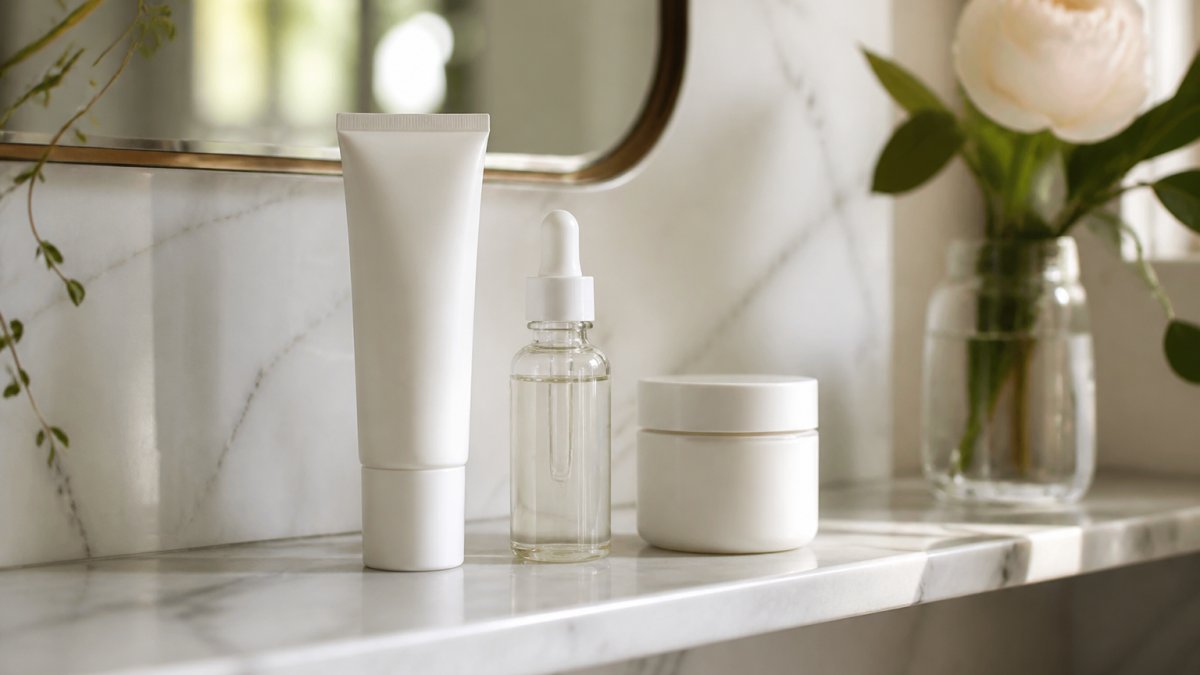
A note on products and patch testing
Whatever you choose, patch test first. Apply a small amount behind the ear or on the inner forearm for two or three days before using it on your face. This is standard advice for sensitive skin, and it matters more when your barrier is still finding its footing.
Our Restore Night Cream and Awaken Day Cream are formulated with barrier-supporting ingredients like shea butter, argan oil, and squalane, fragrance-free and without parabens or talc, for skin that needs calm rather than correction. If you're unsure whether a product's ingredients align with your skin's needs right now, our Ingredient Index breaks down what each component does and why we've chosen it.


Caring for Sensitive Skin After Chemo
Sensitive skin after chemo needs a different approach than everyday sensitive skin.
Fragrance is the first thing to eliminate. Fragrance, even "natural" fragrance, can trigger irritation in healing skin.
Avoid other common irritants:
- Alcohol (drying and irritating)
- Strong acids or actives (save these for later)
- Essential oils (too concentrated for compromised skin)
Choose products made specifically for sensitive skin. These formulas avoid unnecessary ingredients and focus on what your skin actually needs: gentle cleansing, hydration, and barrier support.
Gentle skincare routines designed specifically for the chemotherapy recovery phase can help you navigate this phase with confidence.
When Does Skin Recover After Chemotherapy
Recovery is not one timeline but several overlapping ones, moving at different speeds depending on your treatment, how long it lasted, and how your skin responded. Understanding the shape of recovery helps you set realistic expectations instead of measuring yourself against someone else's progress.
The first few weeks
In the days and weeks after your last infusion, many women notice acute reactivity easing first. Stinging, raw sensitivity, and the feeling that everything irritates your skin often begin to settle within two to four weeks.
This is also when it's tempting to do too much. Resist that. Skin that is calming down is not yet stable, and aggressive products introduced now can trigger a fresh round of irritation that sets you back weeks.
Weeks to months: texture and tone
Roughness, flaking, and the bumpy or uneven texture many women describe after treatment typically improve over one to three months, though the pace varies widely. Hyperpigmentation is slower. Darkening from chemotherapy-related inflammation or sun exposure during a photosensitive period can take many months to fade, and some patches take a year or longer. This frustrates many women, because tone changes stay visible long after the skin feels comfortable again.
Nail changes, including ridges, discoloration, and slow growth, follow their own timeline and often lag behind skin recovery by several months, since nails grow slowly.
Why treatment type changes the picture
Not all chemotherapy affects skin the same way, and one recovery estimate doesn't fit every regimen.
- Anthracycline-based regimens (such as doxorubicin) are well known for photosensitivity and for a phenomenon called radiation recall, in which skin in a previously irradiated area reacts again when certain drugs are given. If you had radiation and then chemotherapy, your care team will want to know about any reaction in the radiated area.
- Taxanes (such as paclitaxel and docetaxel) are associated with nail changes and with skin reactions on the hands and feet, including redness, peeling, and tenderness.
- EGFR inhibitors, a class of targeted therapy rather than classic chemotherapy, very commonly cause an acne-like rash on the face, chest, and back. This rash is not acne and does not respond to typical acne treatments the same way. It needs guidance from your oncology team.
This is not a list to self-diagnose from. It's a reason to ask your oncology team a specific question: given my regimen, what skin changes should I expect, and how long do they usually take to resolve?
What slows recovery
A few factors reliably stretch the timeline:
- Cumulative dose and number of cycles. Longer regimens tend to leave skin more depleted.
- Combination treatment. Chemotherapy plus radiation, or chemotherapy plus targeted therapy, often means more skin involvement and a longer settle.
- Pre-existing skin conditions. Eczema, rosacea, and psoriasis can flare during and after treatment and may need their own plan.
What actually helps
Consistency beats intensity. A simple routine applied daily will do more for texture over three months than an elaborate one applied sporadically. Hydration, barrier support, sun protection, and patience are unglamorous and effective.
If you want a structured way to think about what to use when, our guide to gentle skincare routines for the recovery phase walks through the phases in more detail. And if you are unsure whether what you are seeing is expected, preparing specific questions for your care team can make that conversation more useful.
When to Contact Your Oncology or Dermatology Team
Some skin changes need professional evaluation. Knowing when to reach out prevents small issues from becoming bigger problems.
Contact your oncology or dermatology team if you experience:
- Severe rashes that don't improve with gentle care
- Signs of infection (warmth, pus, increasing redness)
- Blistering or severe peeling
Prepare specific, informed questions to ask your care team about post-chemo skin recovery. They can assess whether what you're experiencing is typical and expected, or whether it needs targeted treatment.
It's also worth asking your dermatology team about which active ingredients are safe to introduce as your skin heals.
Starting Your Gentle Texture Recovery Plan
Recovering skin texture after chemotherapy is possible. It takes time, but it responds well to consistent, gentle care and products formulated for sensitive skin.
Start with the basics: gentle cleansing, hydration, barrier support, and sun protection. Give your skin time to stabilize before introducing anything new.
The Daily Ritual pairs our Awaken Day Cream and Restore Night Cream to support your skin from morning to night during recovery. If you're building a routine from individual products, our Lotus Beauty Co. Skincare collection offers options at each phase of recovery, and you can explore what works best for your skin.

Your skin has been through something significant. It doesn't need to be fixed or corrected.
| Step | Focus | Timing |
|---|---|---|
| Cleanse | Gentle, lukewarm water | Twice daily |
| Hydrate | Apply while skin is damp | Twice daily |
| Moisturize | Barrier support with ceramides | Twice daily |
| Protect | Broad-spectrum SPF 30+ | Daily, reapply every 2 hours outside |
| Address texture | Introduce gradually after stabilization | Once or twice weekly, after 4-8 weeks |
Frequently Asked Questions
How long does it take for skin texture to recover after chemotherapy?
Skin texture recovery varies widely. Many women notice improvements within weeks as hydration returns and irritation subsides. Deeper texture changes, like roughness or uneven tone, often take 3 to 6 months or longer to normalize. Some changes may persist and require ongoing gentle care. Talk with your oncology or dermatology team about what to expect based on your specific treatment.
What skincare ingredients should I avoid after chemotherapy?
After chemotherapy, avoid harsh actives like strong acids, retinoids, vitamin C at high concentrations, and benzoyl peroxide until your skin barrier has fully recovered. Skip fragrance, essential oils, alcohol, and sulfates. Focus on fragrance-free, gentle products with soothing botanicals, shea butter, and squalane that support hydration and barrier repair without irritation.
Can I exfoliate skin after chemotherapy?
Physical exfoliation should be avoided during active treatment and the early recovery period. Once your skin barrier has healed and irritation has subsided, gentle exfoliation may help with texture, but only under guidance from your dermatology team. Start slowly with a soft cloth or very gentle enzymatic exfoliant if cleared by your care team.
How do I know if my skin texture changes need medical attention?
Contact your oncology or dermatology team if you experience persistent redness, severe cracking, signs of infection, worsening texture after weeks of gentle care, or changes that don't improve over months. Uneven pigmentation and texture changes are common and often resolve with time, but professional guidance helps rule out complications and guides your recovery.
Recovery takes patience. Your skin will get there. We're with you every step of the way.
