
Dermatologist-Recommended Skincare for Chemotherapy Patients
Table of Contents
- Understanding Skin Changes During Chemotherapy
- What Dermatologists Recommend for Chemo Rash Treatment
- How to Soothe Radiation Skin Burns and Prevent Further Damage
- Choosing an Oncology-Safe Moisturizer for Your Skin Barrier
- Fragrance-Free Skincare for Oncology Patients: Why It Matters
- Dermatologist-Recommended Skincare Routine for Sensitive, Treatment-Affected Skin
- Safe Makeup and Coverage for Skin Changes During Treatment
- Frequently Asked Questions
Last Updated: September 18, 2026
Skin changes during cancer treatment can feel overwhelming. Redness, dryness, sensitivity, and discomfort are common side effects of chemotherapy and radiation, and finding the right skincare approach matters more than you might think. At Lotus Beauty Co., we understand that dermatologist recommended skincare for chemotherapy patients isn't just about treating symptoms, it's about supporting your skin barrier, minimizing irritation, and helping you feel more like yourself during treatment. This guide covers what dermatologists actually recommend, which ingredients to seek out and avoid, and how to build a routine that works for sensitive, treatment-affected skin.
Understanding Skin Changes During Chemotherapy
Chemotherapy can cause skin changes. Your skin may become dry, reactive, and more prone to redness and irritation. Some patients experience hand-foot syndrome, characterized by pain and peeling on palms and soles. Others develop chemo rash, a condition ranging from mild redness to more pronounced inflammation.
Chemotherapy drugs can affect healthy skin cells and compromise your skin barrier integrity. Radiation therapy can also cause damage through direct exposure, sometimes resulting in photosensitivity and delayed healing.
But skin changes during treatment aren't only a physical reality, they're also an emotional one. Visible changes to your skin, hair, and appearance can affect how you see yourself and how you move through the world. Redness, rashes, peeling, or discoloration may feel more noticeable to you than to anyone else, yet the psychological weight of these changes is real and valid. Some women describe feeling disconnected from their reflection or anxious about being seen. Others grieve the loss of their "normal" skin while managing the stress of treatment itself.
This emotional dimension matters because it influences your skincare choices and your overall sense of wellbeing. A routine that feels caring and intentional, rather than clinical or punitive, can help you reconnect with your body and feel more like yourself during a time when so much feels out of your control. Skincare becomes less about "fixing" your appearance and more about honoring your skin's resilience and your own.
Understanding these changes, both physical and emotional, is the first step toward managing them effectively. Your skin isn't broken; it's responding to intense medical treatment. The right dermatologist recommended skincare for chemotherapy patients acknowledges this reality and supports your skin's natural recovery while respecting your emotional experience.
What Dermatologists Recommend for Chemo Rash Treatment
Chemo rash can appear as flat or raised red patches and may feel itchy or tender. A gentle, non-irritating approach focused on soothing and protecting is often recommended.
A low-pH cleanser, one with a pH closer to your skin's natural pH of 4.5 to 5.5, can be beneficial. Avoid hot water, which can strip your skin further. Use lukewarm water and pat your skin dry gently rather than rubbing.
After cleansing, apply a soothing, fragrance-free moisturizer while your skin is still slightly damp. Ingredients like colloidal oatmeal, ceramides, hyaluronic acid, and petrolatum can be beneficial.
If the rash is severe or spreading, ask your oncology team about topical corticosteroids or other prescribed treatments. Over-the-counter options alone may not be enough.
How to Soothe Radiation Skin Burns and Prevent Further Damage
Radiation dermatitis can develop during or shortly after radiation therapy. Your skin may feel sunburned, appear red or darkened, and develop blistering or peeling in severe cases. A protective, barrier-focused approach can help soothe radiation-affected skin.
Keeping the area clean and moisturized is often recommended. Use only fragrance-free, alcohol-free products. Avoid sun exposure, as radiation-treated skin has increased photosensitivity and needs UV protection. If you go outside, wear protective clothing and a broad-spectrum sunscreen with SPF 30 or higher, applied generously and reapplied every two hours.
Moisturizing is critical for radiation skin recovery. Choose emollient-rich products that don't contain irritating additives. Squalane, jojoba oil, and shea butter can be good choices.
For managing discomfort, cool (not cold) compresses can help temporarily. Avoid tight clothing over affected areas. Increasing water intake may support skin comfort.
Choosing an Oncology-Safe Moisturizer for Your Skin Barrier
Your skin barrier is your first line of defense against irritation and infection. During cancer treatment, it can be compromised, so choosing the right moisturizer matters. An oncology-safe moisturizer should be fragrance-free, free of alcohol and drying agents, and formulated specifically for sensitive skin.
Look for moisturizers that include:
- Ceramides
- Hyaluronic acid
- Petrolatum or squalane
- Soothing botanicals like aloe or colloidal oatmeal
Avoid products with essential oils, fragrance (even natural fragrance), strong preservatives, or high concentrations of active ingredients like retinol or vitamin C. These can irritate compromised skin.
Consider your skin type within the context of treatment. If your skin is extremely dry, a richer night cream works better than a lightweight lotion. If you're prone to sensitivity, start with the simplest formulation possible and add products slowly.

Our Awaken Day Cream is formulated specifically for treatment-affected skin, combining aloe with argan oil, jojoba, and shea butter to hydrate without heaviness. For nighttime, the Restore Night Cream offers richer nourishment with squalane and soothing botanicals to support your skin barrier overnight. If you're looking for a complete routine, The Daily Ritual pairs both creams for morning and evening care.


Fragrance-Free Skincare for Oncology Patients: Why It Matters
Fragrance can be a cause of skin irritation, and it's especially problematic during cancer treatment. Even "natural" fragrance and essential oils can trigger reactions in sensitive, treatment-affected skin. This is why fragrance-free skincare for oncology patients is so important.
Many mainstream skincare brands use fragrance to mask other ingredients or improve the sensory experience. But during treatment, fragrance can cause redness, burning, itching, and inflammation, which you're trying to avoid.
When shopping for fragrance-free products, read labels carefully. "Unscented" doesn't always mean fragrance-free; some brands use masking fragrance to hide the scent of other ingredients. True fragrance-free products contain no fragrance or fragrance components at all.
Lotus Beauty Co. products are 100% fragrance-free by design. We prioritize ingredient transparency so you know exactly what's in every product. Our Ingredient Index lets you research every component, giving you confidence and control over what touches your skin.
Dermatologist-Recommended Skincare Routine for Sensitive, Treatment-Affected Skin
A skincare routine for chemotherapy patients can be simple, consistent, and focused on protection and hydration. Simplicity can help reduce the risk of irritation.
Morning Routine:
- Rinse with lukewarm water or use a gentle, fragrance-free cleanser
- Pat skin dry gently
- Apply a hydrating, fragrance-free moisturizer while skin is still slightly damp
- If going outside, apply broad-spectrum sunscreen (SPF 30+) and reapply every two hours
Evening Routine:
- Cleanse gently with a low-pH, fragrance-free cleanser
- Pat skin dry
- Apply a richer moisturizer to support overnight barrier repair
- Consider a hydrating lip balm if lips are dry or sensitive
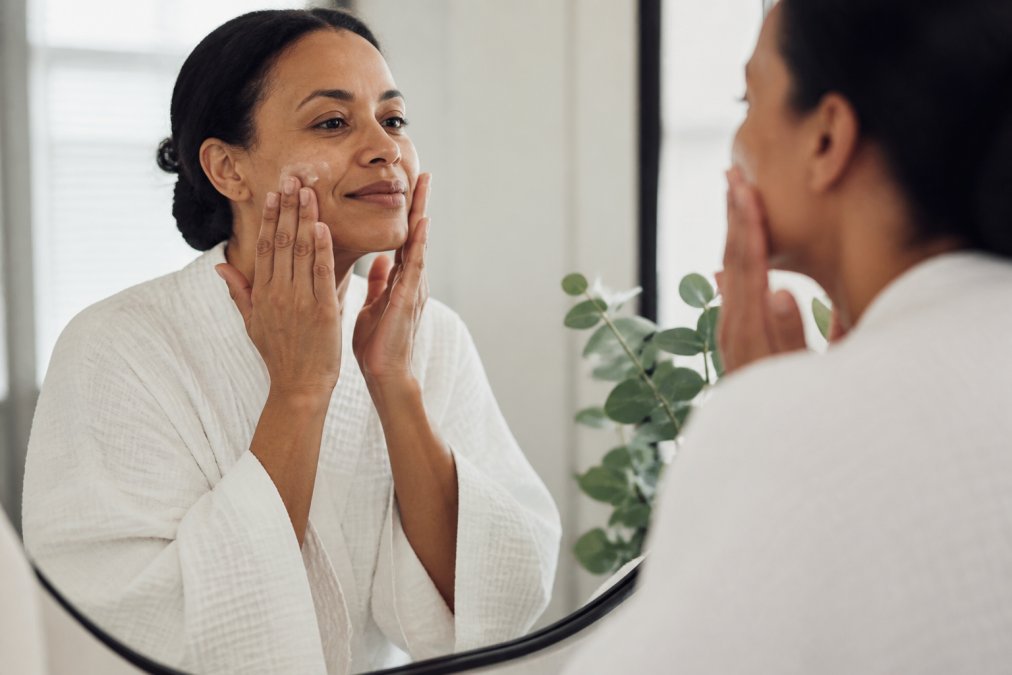
Keep your routine minimal during active treatment. You can add products later, once your skin stabilizes. A simple routine of cleanser, moisturizer, and sunscreen can be effective.
Timing matters too.
Safe Makeup and Coverage for Skin Changes During Treatment
Many women want to wear makeup during treatment, and that's completely valid. The right approach to makeup helps you feel more like yourself without compromising skin health.
Scalp Care During and After Hair Loss
If your treatment includes chemotherapy or radiation that causes hair loss, your scalp requires specific attention. The scalp is skin too, and it can become more sensitive and vulnerable during hair loss and in the months after regrowth begins.
During active hair loss:
After hair loss, as regrowth begins:
Frequently Asked Questions
What should I use on my skin during chemotherapy?
During chemotherapy, focus on gentle, fragrance-free products that support your skin barrier without irritation. Use a low-pH cleanser to remove impurities without stripping moisture, followed by a dermatologist-recommended oncology-safe moisturizer containing ceramides, hyaluronic acid, or petrolatum to lock in hydration. Avoid products with alcohol, fragrances, sulfates, or harsh actives. Your dermatologist can recommend specific products based on your individual skin response to treatment.
What ingredients should I avoid in skincare during chemotherapy?
Avoid fragrances (including fragrance-free claims that may contain masking scents), drying alcohols, sulfates, parabens, essential oils, retinoids, vitamin C serums, and exfoliating acids during active treatment. These can irritate already-sensitive skin and compromise your skin barrier. Stick to gentle, hypoallergenic, non-comedogenic products with soothing ingredients like colloidal oatmeal, aloe, and botanical extracts that support rather than stress your skin.
Are fragrance-free products better for oncology patients?
Yes. Fragrance-free skincare is strongly preferred for oncology patients because fragrance is a common irritant that can trigger sensitivity, redness, and burning sensations on treatment-affected skin. Even products labeled fragrance-free may contain masking scents, so look for brands that explicitly state all fragrance ingredients on their label. Lotus Beauty Co. products are 100% fragrance-free with full ingredient transparency, so you know exactly what you're applying to your skin.
How can I tell if a skincare product is truly oncology-safe?
Oncology-safe products should be dermatologist-tested for irritation and sensitization, free of fragrances and drying alcohols, and formulated specifically for sensitive or treatment-affected skin. Look for products that avoid parabens, sulfates, and talc. Check ingredient labels carefully, and if possible, consult your oncology or dermatology care team before introducing new products. Lotus Beauty Co. products are dermatologist-tested and guided by oncology and dermatology advisors, with complete ingredient transparency so you can make informed choices.
What's the difference between drugstore and medical-grade skincare for chemotherapy skin?
Both drugstore and medical-grade options can be gentle and appropriate during treatment. Cost varies widely, but the most important factor is whether the product is fragrance-free, dermatologist-tested, and free of known irritants, regardless of price point.