
Lindi Skin Alternative: Oncology Skincare Guide
Table of Contents
- What to Compare in a Lindi Skin Alternative
- Oncology-Safe Skincare: What the Label Should Tell You
- Skincare During Chemotherapy: Dryness, Sensitivity, and Comfort
- Radiation Therapy Skin: Protection and Calming Relief
- Why Fragrance-Free Skincare for Sensitive Skin Matters
- Oncology Skincare Options to Consider
- When to Ask Your Oncology or Dermatology Team
- Conclusion: Choosing an Oncology Skincare Routine With Confidence
- Frequently Asked Questions
Last Updated: October 5, 2026
What to Compare in a Lindi Skin Alternative
If you are searching for a Lindi Skin alternative for oncology patients, you are really asking a bigger question: what belongs on skin that is dry, reactive, or changing during treatment? At Lotus Beauty Co., we hear this often from women who want a shorter, gentler routine they can trust.
Most search results hand you a product page and leave the comparing to you. We would rather give you the framework: how to evaluate any alternative, including ours.
Start With the Ingredient List, Not the Marketing
Ingredient transparency means a brand lists every ingredient and explains why each one is there. The FDA guidance on cosmetic ingredient labeling explains what labels are required to disclose, and it is a useful benchmark: if a brand will not show you a full list, that tells you something.
When you read that list, pay attention to a few common triggers for stinging or redness on sensitive skin:
- Added fragrance and essential oils. Fragrance is one of the most frequently reported causes of contact reactions in cosmetics. "Unscented" is not the same as "fragrance-free," because an unscented product can still contain masking fragrance.
- Drying alcohols. Denatured alcohol and alcohol denat. can feel tight or stripping on dry skin. Not every alcohol is a problem; fatty alcohols like cetyl and stearyl alcohol are emollients, so read the specific name rather than the word alone.
- Preservatives. Preservatives keep a product from growing bacteria, which matters for compromised skin. Some people react to specific ones, but a preservative-free water-based cream carries its own risks. This is a good question for your care team.
No ingredient is universally safe or unsafe for every person. The goal is to know what is in the bottle, understand your sensitivities, and let your clinicians weigh in on anything touching treated skin.
Compare Cost Per Ounce, Not Just the Sticker Price
A jar price tells you very little on its own. Two moisturizers can sit at similar prices and differ by half in size. Divide the price by the number of ounces to get cost per ounce, then ask how long the jar realistically lasts with twice-daily use.
It also helps to compare how many products a line asks of you. A cleanser, a day cream, a night cream, and a balm is a four-product routine; some lines ask for eight or ten steps.
Check Availability, Texture, and Intended Use
Four more criteria worth lining up side by side:
- Availability. Is it easy to reorder, or does it sell out often? Running out mid-treatment is its own kind of stress.
- Texture. A lightweight lotion suits daytime; a richer cream or balm suits overnight and very dry patches. Texture affects whether you will actually use it.
- Intended use. A face cream, a body lotion, and a lip balm are not interchangeable. Match the product to the area.
A Simple Comparison Worksheet
Five lines on a notepad will do:
- Full ingredient list available? Yes or no.
- Fragrance-free stated on the label? Yes or no.
- Cost per ounce.
- Number of steps the routine requires.
- Any ingredient your care team has told you to avoid.
If a product fails line one or line five, it is not the right starting point for you right now. Everything else is preference.
Where Lotus Fits In
Our own approach centers on a short routine with full ingredient transparency. The Daily Ritual pairs Awaken Day Cream and Restore Night Cream for a morning-to-night routine built with dry, sensitive, and treatment-affected skin in mind.

We are not claiming to be the right answer for everyone. We are claiming you deserve to see the full picture before you decide.
Oncology-Safe Skincare: What the Label Should Tell You
Oncology-safe skincare is a marketing phrase, not a regulated medical term. No cosmetic product is approved to treat or prevent a medical condition. What the phrase should signal is a formulation built for fragile, sensitive skin: fragrance-free, gentle, and free of common irritants.
Here is what a useful label tells you:
- Full ingredient list, not a partial one
- A clear "fragrance-free" claim, not "unscented"
- No drying alcohols or added dyes
Skincare During Chemotherapy: Dryness, Sensitivity, and Comfort
Chemotherapy can leave skin dry, flaky, itchy, and quick to sting. Many women find the products they loved before treatment suddenly feel too strong. The goal during this stretch is not correction but comfort, and comfort comes from matching what you use to what your skin is doing.
Different symptoms call for slightly different approaches. Here is a practical map.
Dryness and Flaking
Dryness is the most common complaint, and it usually responds to layering moisture rather than one product.
- Cleanse gently. Use a non-foaming cleanser or soap-free wash with lukewarm water. Hot water strips oil. Skip washcloths and anything that scrubs.
- Moisturize damp. Pat skin dry and apply moisturizer within about three minutes, while skin is still slightly damp. That window helps hold water in.
- Layer for very dry skin. A humectant-rich serum or lotion under a richer cream can help. Look for glycerin, hyaluronic acid, or squalane in the lighter layer, and shea butter, jojoba, or ceramides on top.
Itching and Redness
Itching and redness often go together and often trace back to a trigger you can remove.
- Audit for fragrance. Fragrance is a frequent cause of contact reactions (pubmed.ncbi.nlm.nih.gov). Switch to fragrance-free cleanser, moisturizer, and laundry detergent, and give it a week or two to see whether things settle.
- Cool compresses. A soft cloth dampened with cool water can calm an itchy patch. Keep it brief and pat, do not rub.
- Avoid hot showers and long baths. They feel good in the moment and make itching worse afterward.
Chapped Lips
Lips have almost no oil glands and dry out fast during treatment.
- Choose a simple balm with few ingredients, and reapply often, especially before eating and before bed.
- Avoid flavored or plumping balms, which often contain irritants.
- If lips crack or bleed, call your care team rather than reaching for another balm.
Cleansing, Hydration, and Lip Care
The short version: cleanse gently, moisturize morning and night, protect lips, and keep the routine small enough to follow. A lightweight day cream suits mornings, a richer night cream supports skin overnight, and a balm handles lips. That is most of what changing skin needs.

How This Differs From Radiation-Site Care
Chemotherapy affects skin all over the body, so general gentle care applies broadly. Radiation is different. It affects a specific treatment field, and that area follows your radiation team's instructions first, every time. Do not apply a general moisturizer, balm, or serum to a radiation treatment area without asking. The two situations look similar and are not managed the same way.
A Note on What Cosmetics Can and Cannot Do
A moisturizer can soften dry skin, reduce tightness, and make skin feel more comfortable. It cannot treat, prevent, or cure a medical condition, and no cosmetic is a substitute for clinical care. If your skin is reacting in ways that worry you, your oncology or dermatology team is the right first call. Our advisory board helps guide how we formulate, but your clinicians guide your care.
Radiation Therapy Skin: Protection and Calming Relief
Radiation-affected skin needs protection more than products. Covered areas should stay out of direct sun, and treated skin is usually best left to your radiation team's guidance.
For skin outside the treatment area, keep it simple: gentle cleansing, a fragrance-free moisturizer, and no exfoliants or hot showers. Ask before applying anything new to treated skin. That is the one area where your oncology team's instructions should always come first.
Why Fragrance-Free Skincare for Sensitive Skin Matters
Fragrance-free skincare for sensitive skin matters because fragrance is one of the most common causes of contact reactions in cosmetics. When your skin barrier is already compromised, added scent is one more thing it has to tolerate. That is why every Lotus Beauty Co. formula is 100% fragrance-free, talc-free, and paraben-free, with a published ingredient index so you can read before you buy.
Oncology Skincare Options to Consider
The most practical oncology skincare routine is a short one: cleanse gently, moisturize morning and night, and protect lips.
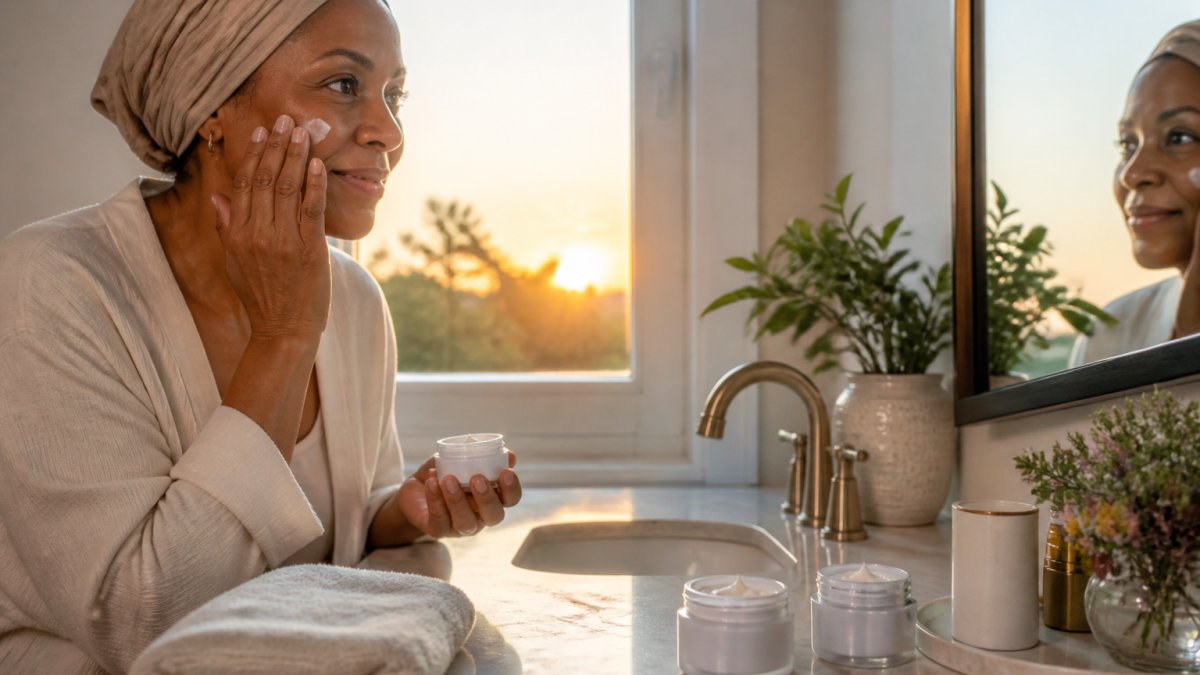
Our own approach centers on that idea. The Daily Ritual pairs Awaken Day Cream and Restore Night Cream for a morning-to-night routine built for dry, sensitive, and treatment-affected skin.

| Option | What It Is | Best For | Price |
|---|---|---|---|
| Awaken Day Cream | Lightweight fragrance-free day moisturizer | Daytime dryness and sensitivity | $45.99 |
| Restore Night Cream | Rich fragrance-free night moisturizer | Overnight dryness and comfort | $49.99 |
| The Daily Ritual | Awaken and Restore together | A simple two-step routine | $89.99 |
If you are unsure where to start, our skincare collection is organized so you can build the routine that fits your skin right now.
When to Ask Your Oncology or Dermatology Team
Ask your care team before adding any new product during active treatment, and always before applying anything to radiated skin. Bring the ingredient list with you. If you notice spreading redness, blistering, open areas, or itching that keeps you awake, that is a medical question, not a product question, and it deserves a call.
Your oncology or dermatology team knows your treatment, your medications, and your history. We do not. Our advisory board helps guide how we formulate, but your clinicians guide your care.
Conclusion: Choosing an Oncology Skincare Routine With Confidence
Choosing a routine during treatment is hard because your skin keeps changing and the internet keeps shouting. Start with the basics: fragrance-free, few steps, ingredients you can read. Then let your care team weigh in on anything touching treated skin.
If you want a place to begin, Lotus Beauty Co. makes a simple two-step routine with full ingredient transparency, fragrance-free formulas, and dermatologist-tested products designed for sensitive, changing skin. Explore virtual shade matching and cosmetics when you are ready for color again, too.
Frequently Asked Questions
What should I compare when choosing an alternative to Lindi Skin?
Start with four things: the full ingredient list, whether the formula is fragrance-free, how many steps the routine requires, and the cost per product. Fragrance is a common trigger for sensitive skin, so a fragrance-free formula is often the first filter. Then look at whether the moisturizer is light enough for daytime and rich enough for overnight. Finally, check the price of each item and whether a bundled routine costs less than buying pieces separately. Bring your shortlist to your oncology or dermatology team before switching.
Is fragrance-free skincare a good choice for sensitive skin?
For many people with sensitive or treatment-affected skin, fragrance-free formulas are a practical starting point because added fragrance is a frequent cause of irritation and itching. Fragrance-free does not automatically mean a product will suit your skin, since other ingredients can still cause reactions. Read the full ingredient list rather than relying on front-of-label claims, and patch test on a small area first. If your skin is cracked, blistered, or reacting to radiation, ask your care team before applying anything new.
What skincare can I use during chemotherapy?
Many people in chemotherapy focus on gentle cleansing, consistent moisturizing, and lip care, using products without added fragrance or drying alcohols. A simple two-step routine, a light cream in the morning and a richer cream at night, is often easier on skin than a long list of products. Your oncology team can tell you whether any ingredients should be avoided during your specific treatment. If you develop a rash, open skin, or sudden swelling, stop the product and contact your care team.
How can I check skincare ingredients before using a new product?
Look for a complete ingredient list on the packaging or the brand's website, not just a highlight of two or three hero ingredients. Compare that list against products you already know your skin tolerates, and note anything you have reacted to before. Fragrance, essential oils, and exfoliating acids are common culprits for reactive skin. If a brand publishes an ingredient index or education page, use it to understand what each ingredient does. When in doubt, patch test and ask your dermatology team.
When should I ask my oncology or dermatology care team about skincare?
Ask before starting any new product if you are in active treatment, especially during radiation, when the treated area needs specific care. Also check in if you notice itching, redness, flaking, blistering, or open skin, since these can need medical attention rather than a new moisturizer. Bring the actual product or its ingredient list to your appointment so your team can review it with you. Their guidance is specific to your treatment plan in a way no general article can be.
Your skin may be asking for something different than it did a year ago, and that is worth honoring rather than fighting. Lotus Beauty Co. offers fragrance-free, dermatologist-tested skincare with published ingredients, a simple two-step routine, and guidance from oncology and dermatology advisors. Get started with Lotus Beauty Co. and give your skin a routine that feels calm, clear, and yours.