
Fragrance Free Moisturizer for Oncology: 2026 Guide
Table of Contents
- What Makes a Moisturizer Right for Oncology Skin
- Ingredients to Look For (and What to Avoid)
- How to Soothe Radiation Skin Burns with Gentle Moisture
- Building an Oncology Skincare Routine That Works
- Our Picks: Fragrance Free Moisturizers for Treatment-Affected Skin
- Application Tips for Compromised Skin
- When to Talk to Your Care Team
- Frequently Asked Questions
Last Updated: September 14, 2026
What Makes a Moisturizer Right for Oncology Skin
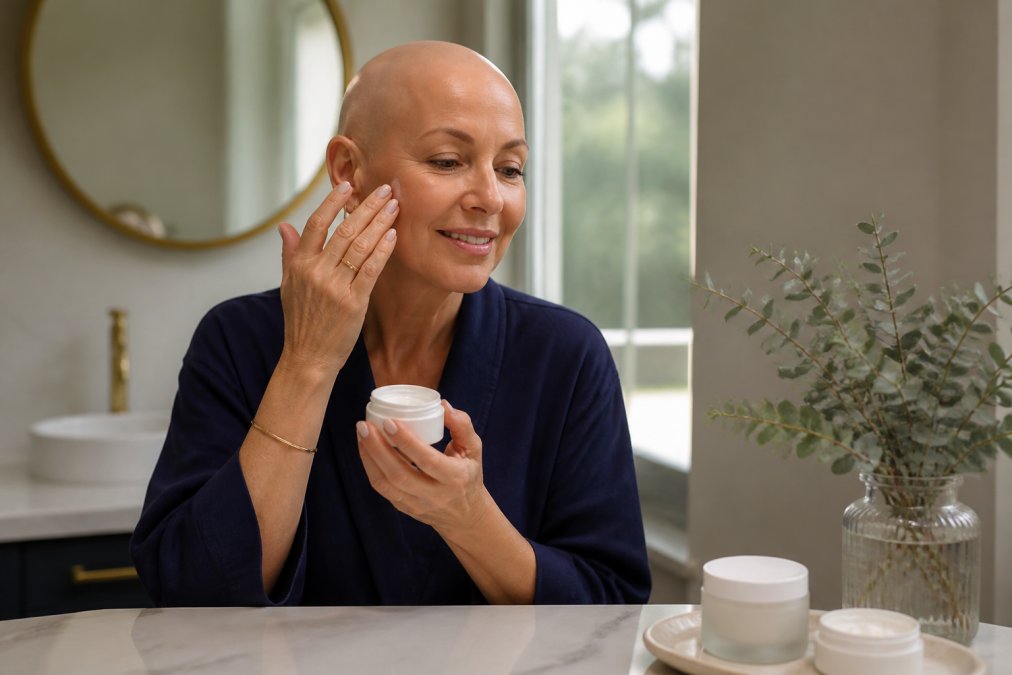
A fragrance free moisturizer for oncology is made without added fragrance, essential oils, or masking scents, using gentle ingredients that support a compromised skin barrier during cancer treatment. At Lotus Beauty Co., we build our skincare around that standard, because what touches reactive skin matters as much as what is left out.
Fragrance is one of the most common causes of contact irritation in skincare, and skin in active treatment is far more reactive (pubmed.ncbi.nlm.nih.gov). That is why the first rule of an oncology routine is comfort, not anti-aging or brightening. Below, we cover how treatment changes your skin, which ingredients help, and how to apply a fragrance free moisturizer well.
How Cancer Treatment Changes Your Skin
Chemotherapy, radiation, and hormone therapy each affect skin differently, but the result often looks similar: dryness, itching, redness, and a weakened moisture barrier. Radiation can cause dermatitis in the treated area, with skin that feels sunburned, tight, or peeled (pubmed.ncbi.nlm.nih.gov). Some chemotherapy agents reduce oil production and slow cell turnover, leaving skin thin and flaky.
Hormone therapy can bring unusual dryness and sensitivity, and immunotherapy may trigger rashes. Because these effects vary by treatment, drug, and dose, your care team is the best source of guidance. What we can offer is a gentle framework: fewer ingredients, more hydration, and nothing that stings.
Ingredients to Look For (and What to Avoid)
The most useful way to think about ingredients during treatment is by what they do, not by how "clean" they sound. A short, well-chosen formula usually serves reactive skin better than a long one.
Humectants pull water into the skin. Glycerin, panthenol (provitamin B5), hyaluronic acid, and aloe are common examples. They work best on damp skin.
Emollients soften and smooth. Jojoba, squalane, shea butter, and argan oil help skin feel less tight and rough without a heavy film.
Occlusives slow water loss by sealing the surface. Dimethicone, petrolatum, and plant butters are typical. Petrolatum has a long history of use on compromised skin and is often recommended by radiation teams, though individual guidance varies (pubmed.ncbi.nlm.nih.gov).
Barrier-support ingredients include ceramides, cholesterol, fatty acids, and low-concentration niacinamide. These mirror components skin already makes, which is part of why they tend to be well tolerated.
Soothing botanicals such as colloidal oatmeal, allantoin, and bisabolol are frequently included for comfort. Oatmeal has a well-documented history of use for itchy, irritated skin.
What to Approach With Caution
- Added fragrance and essential oils. Even oils marketed as "natural" can trigger contact irritation on reactive skin.
- Drying alcohols. Denatured, SD, and isopropyl alcohol can strip a fragile barrier. Not every alcohol is drying (cetyl and stearyl alcohols are emollients), so read the full list rather than scanning for the word.
- Exfoliating acids and retinoids. Glycolic, lactic, salicylic, and retinol can be too much during active treatment. Many oncology teams advise pausing them until skin stabilizes.
- Preservatives known to sensitize. Methylisothiazolinone and methylchloroisothiazolinone are common contact allergens. Formaldehyde-releasing preservatives are another category some people react to.
- Cooling or tingling claims. Menthol, camphor, and peppermint feel refreshing but can sting compromised skin.
- High-concentration actives. A 20% vitamin C serum or a strong AHA peel is not the moment. If you love an active, ask your care team whether it can wait.
A Note on Treatment-Specific Interactions
Different treatment classes affect skin differently. A few patterns worth knowing:
- Radiation therapy tends to cause a localized reaction in the treated field. Many radiation oncology teams ask patients to avoid metallic-containing products (including some zinc oxide sunscreens) directly on the treatment area, and to use only what the team has approved.
- Platinum-based chemotherapy (such as cisplatin or carboplatin) and taxanes (such as paclitaxel or docetaxel) are commonly associated with dry, sensitive skin and sometimes nail changes. Gentle, fragrance-free moisturizers are typically the first line of comfort.
- EGFR inhibitors (such as erlotinib or cetuximab) are well known for causing an acne-like rash. This is a medical issue, not a cosmetic one, and it belongs in your care team's hands. Do not treat it with acne products, which usually make it worse.
- Hormone therapy (such as tamoxifen or aromatase inhibitors) can bring unusual dryness and sensitivity, sometimes alongside hot flashes that make skin feel reactive.
- Immunotherapy can trigger rashes or itching. Report new or spreading rashes to your team rather than experimenting with new products.
This is not a complete list, and it is not a substitute for your care team's guidance. It is a starting point for a better conversation with them. Our Ingredient Index lists every ingredient we use in plain language, and our advisory board includes clinicians who review our approach.
How to Soothe Radiation Skin Burns with Gentle Moisture
Learning how to soothe radiation skin burns starts with simplicity: cleanse with lukewarm water, pat dry, and apply a fragrance free moisturizer while skin is still slightly damp. Damp skin holds moisture more effectively than dry skin.
Radiation skin tends to be fragile, so treat the area like a fresh sunburn. Skip hot showers, avoid rubbing with a towel, and do not apply anything your radiation team has not approved. Some teams recommend specific creams during radiation; follow their guidance first, then layer in gentle moisturizers around it.
If your skin is weeping, blistered, or broken, stop applying over-the-counter products and call your care team. Moisturizer is for intact, dry, or irritated skin, not for open wounds.
Building an Oncology Skincare Routine That Works
A workable oncology skincare routine is short: cleanse, moisturize, protect, repeat. During treatment, fewer steps usually means fewer chances for irritation, and consistency matters more than complexity.
Morning:
- Rinse with lukewarm water or a mild, fragrance-free cleanser
- Apply a light, fragrance free moisturizer while skin is damp
- Add broad-spectrum mineral sunscreen if your care team approves it
Evening:
- Remove sunscreen or makeup gently, without scrubbing
- Apply a richer moisturizer to lock in hydration overnight
- Give skin a few minutes to absorb before lying down
Weekly:
- Check your skin for new redness, peeling, or tenderness
- Rotate in a fresh pillowcase and launder towels in fragrance-free detergent
- Note any product that stings, and set it aside
That is the whole routine. If your skin is very dry, reapply moisturizer midday without removing anything first.
Our Picks: Fragrance Free Moisturizers for Treatment-Affected Skin
Two Lotus Beauty Co. moisturizers anchor this list, designed to work as a pair: one for daytime comfort, one for overnight nourishment. Both are 100% fragrance-free, talc-free, and paraben-free, with full ingredient transparency.
Product |
Price |
Texture |
Best For |
|---|---|---|---|
$45.99 |
Light, non-greasy |
Morning hydration |
|
Restore Night Cream |
$49.99 |
Richer, still non-greasy |
Overnight barrier support |
The Daily Ritual |
$89.99 |
Both creams |
A complete routine |
Return to Self Gift Set |
$94.00 |
Both creams plus bag |
Gifting a loved one |
Awaken Day Cream: Light Comfort for Morning
Awaken Day Cream is our daytime pick because it hydrates without sitting heavy. Aloe and moisture-loving ingredients help quench dry skin, while argan oil, jojoba, shea butter, and soothing botanicals soften and comfort. It layers cleanly under sunscreen, which matters when your morning routine needs to stay minimal.

If your skin is severely dry or flaking, a light cream alone may not be enough by mid-afternoon. Pair it with Restore at night, or reapply a small amount at lunch.
Restore Night Cream: Deeper Nourishment Overnight
Restore Night Cream is the richer half of the pair, built with argan oil, jojoba, shea butter, squalane, and soothing botanicals to support softness and the skin's natural moisture barrier overnight. It absorbs without a greasy film, so it will not stain your pillowcase or feel suffocating.
Overnight is when your skin does its quiet repair work. A slightly richer cream at night, applied to damp skin tends to feel more comfortable by morning than a light lotion applied twice.
Application Tips for Compromised Skin
How you apply matters as much as what you apply, especially when skin is fragile. The zone-by-zone approach below is what we walk through with readers to help keep a whole-body routine manageable during treatment.
The Basics That Apply Everywhere
- Apply to damp skin. Within about a minute of cleansing or rinsing, while skin is still moist. Damp skin holds hydration more effectively than dry skin.
- Use a gentle, upward motion. No rubbing, tugging, or scrubbing.
- Warm the product first. A small amount between clean fingertips helps it spread without pulling skin.
- Go light on the treated area. During radiation, apply only what your care team has approved, and never over broken skin.
- Patch test first. Apply a small amount to the inner forearm and wait 24 hours before using it on your face.
Zone-by-Zone: Where Most People Get Stuck
Scalp. Hair loss during chemotherapy leaves the scalp exposed and often tender. A fragrance-free moisturizer or simple emollient can help with tightness and flaking. Apply with clean fingertips using light pressure, avoid menthol or cooling agents, and wear a soft cap or scarf outdoors for sun protection. If the scalp is broken or weeping, call your care team first.
Face. The face is usually the most reactive area. Apply a light layer of moisturizer to damp skin, wait a minute, then add sunscreen if your team has approved it. Skip the eye area if it stings, and avoid layering multiple serums. If you wear makeup, a fragrance-free cream-to-powder formula applied with a clean sponge tends to be gentler than a brush on reactive skin.
Hands and cuticles. Hands take a beating from frequent washing and sanitizer. Keep a fragrance-free cream by every sink and reapply after each wash. For cuticles, a small amount of a richer balm or oil at night, covered with cotton gloves, can make a noticeable difference by morning.
Feet. Neuropathy, swelling, and dry, cracked heels are common during treatment. Moisturize after bathing, then put on clean cotton socks. If you have neuropathy, check your feet daily for cuts or blisters you may not feel, and mention any changes to your care team. Avoid hot foot soaks, which can dry skin further.
Elbows, knees, and shins. These areas have fewer oil glands and dry out quickly. A slightly richer cream or a thin layer of petrolatum over your moisturizer at night can help. Apply after a lukewarm shower, before you are fully dry.
Neck and chest. Often the first place radiation dermatitis shows up if you are treated in that area. Follow your radiation team's instructions exactly, and do not apply anything they have not approved to the treatment field.
Under breasts and in skin folds. Moisture and friction can cause irritation. Keep the area clean and dry, use a light fragrance-free moisturizer rather than a heavy one, and let skin breathe. If you see redness, a rash, or any sign of infection, contact your care team.
A Few Habits That Help
- Introduce one new product at a time. If a reaction happens, you will know what caused it. Give each new item a few days before adding another.
- Keep a simple log. Note what you used, where, and how your skin responded. This is useful at your next appointment.
- Launder towels and pillowcases in fragrance-free detergent. Residue from scented detergent can undo a good routine.
- Reapply midday if you need to. A small amount of moisturizer over clean skin is fine.
When to Talk to Your Care Team
Some skin changes are expected during treatment. Others need a professional eye, and knowing the difference protects you.
Contact your oncology or dermatology team if you notice:
- Blisters, open sores, or weeping skin
- Sudden swelling, warmth, or spreading redness
- A rash that appears alongside fever or feeling unwell
- Severe itching that disrupts sleep
- Peeling or pain in the treated area that is getting worse
Your care team can tell you whether a product is appropriate for your treatment, and whether a prescription cream would help. Bring your product list to your next appointment, or take a photo of the labels. No question about your skin is too small.
Frequently Asked Questions
Why is fragrance-free skincare recommended during cancer treatment?
Cancer treatment often weakens the skin's protective barrier, making it more reactive to irritants. Fragrance is one of the most common causes of contact irritation, even in products labeled natural. Choosing a fragrance free moisturizer for oncology care reduces the chance of triggering redness, itching, or stinging on already sensitive skin. It is a simple step that removes one known irritant from your routine.
What ingredients should I avoid in moisturizers for sensitive skin?
Look for products free of synthetic fragrance, parabens, phthalates, and drying alcohols. Some people also react to essential oils, even plant-based ones, so patch testing is wise. A short ingredient list with recognizable emollients, humectants, and occlusives is often gentler. If you are unsure, bring the ingredient list to your oncology or dermatology team before applying.
How can I soothe radiation skin burns safely at home?
Gentle, fragrance-free moisture can help comfort skin during radiation. Apply a thick, non-irritating moisturizer after your daily treatment once your care team says it is okay. Avoid hot water, harsh scrubs, and any product with fragrance or alcohol. If the area is blistered, weeping, or very painful, contact your radiation oncology team before applying anything new.
How often should I apply moisturizer during radiation or chemotherapy?
Many people find that applying a fragrance free moisturizer two to three times daily helps maintain comfort, especially after bathing while skin is still damp. During radiation, follow your care team's guidance on timing around treatment sessions. Reapply whenever skin feels tight or dry. Consistency matters more than using a large amount at once.
Is it necessary to use oncology-specific skincare products?
You do not need a separate category of products, but you do need formulas that are gentle, fragrance-free, and free of common irritants. Some oncology-focused lines, like ours, are developed with sensitive and treatment-affected skin in mind and reviewed by dermatology and oncology advisors. Always check with your care team about what is right for your situation. Skin changes during treatment can feel like one more thing to manage on a long list, and choosing the right moisturizer should not add to that weight. Lotus Beauty Co. makes that choice simpler with 100% fragrance-free, dermatologist-tested formulas guided by oncology and dermatology advisors, including our Awaken Day Cream and Restore Night Cream, or The Daily Ritual if you want both in one step. Start with a gentle routine you can actually keep, and let your skin have one less thing to fight.