
7 Skin Changes From Hormone Therapy and How to Manage Them
Last Updated: October 25, 2026
Quick Summary
Managing hormone therapy skin changes starts with a gentle, fragrance-free routine that supports your skin barrier: cleanse softly, moisturize on damp skin, and protect with sunscreen. Because hormone therapy skin responses vary by therapy and dose, simplify your products and tell your care team about symptoms rather than stopping treatment on your own.
- Apply moisturizer within about a minute of washing, while skin is still slightly wet.
- Pause exfoliating acids and retinoids until reactive skin settles.
- Patch test new products on your inner arm for a few days first.
- Photograph skin changes in consistent lighting to track whether they improve or worsen.
- See a dermatologist for spreading rashes, cracking or bleeding skin, or sores that will not heal.
Table of Contents
- How Hormone Therapy Changes Your Skin
- Dry Skin During Hormone Therapy: Why It Happens and What Helps
- A Skincare Routine for Sensitive Skin During Cancer Treatment
- When to See a Dermatologist for Skin Changes
- How Long Do Hormone-Related Skin Changes Last?
- Skin Changes From Non-Menopause Hormone Therapy
- Your Next Step: Choosing Products That Respect Changing Skin
- Frequently Asked Questions
How Hormone Therapy Changes Your Skin
Hormone therapy skin changes are real, common, and rarely explained well. If your face suddenly feels tight, dry, or newly reactive, you are not imagining it.
Hormones help regulate oil production, moisture retention, and the skin's ability to repair itself. When hormone levels shift, whether from menopause, cancer treatment, or another therapy, the skin often responds first. Many women notice dryness, sensitivity, or breakouts before they connect the dots to their medication.
Estrogen, Collagen, and Your Skin Barrier
Estrogen supports collagen production and helps the skin barrier hold water (pubmed.ncbi.nlm.nih.gov). When estrogen drops, collagen synthesis slows and the barrier becomes less effective at keeping moisture in. The result is thinner-feeling skin, more visible fine lines, and a complexion that reacts to products it once tolerated.
The National Institute on Aging's overview of menopause and health notes that these shifts are a normal part of hormonal aging, though timing and severity vary widely. If you want to go deeper, our guide to ingredients that support a damaged moisture barrier explains what to look for.
Dry Skin During Hormone Therapy: Why It Happens and What Helps
Dry skin during hormone therapy is usually a barrier problem, not a cleansing problem. When hormones shift, the skin's outer layer can lose some of its ability to hold water, and the result is tightness, flaking, and a complexion that stings when you apply products it once tolerated. Scrubbing harder or layering stronger actives tends to make it worse. The fix is gentler and more deliberate, not more aggressive.
What Is Actually Happening in the Skin
The outermost layer of skin works like a brick wall: skin cells are the bricks, and a mix of lipids (ceramides, cholesterol, and fatty acids) is the mortar. Hormonal changes can thin that mortar, which lets water escape more easily. That process is called transepidermal water loss, and it is why skin can feel dry even when you are drinking enough water and using moisturizer.
What to Try First
Start with the smallest number of changes that address the barrier directly:
- Cleanse gently. Choose a mild, fragrance-free, non-foaming cleanser. Foaming formulas and anything labeled "purifying" or "clarifying" can strip lipids the barrier is already short on. Use lukewarm water, not hot.
- Moisturize on damp skin. Apply within about a minute of washing, while skin is still slightly wet, to help seal in water. Look for ceramides, glycerin, hyaluronic acid, squalane, or shea butter near the top of the ingredient list.
- Layer occlusives at night. A richer cream or a thin layer of petrolatum-based ointment on very dry patches can reduce overnight water loss. This is especially useful in winter or in air-conditioned rooms.
A common mistake is layering several new products at once to fix dryness fast. Introduce one change at a time, ideally over a week or two, so you can tell what helps and what irritates. If a product burns on application, stop using it rather than pushing through.
Ingredient Notes for Sensitive, Dry Skin
Not every "hydrating" ingredient suits every person. Hyaluronic acid draws water to the skin, but in very dry climates it can pull moisture from deeper layers if it is not sealed in with an occlusive. Our guide to ingredients that support a damaged moisture barrier walks through what to look for on a label, and our Ingredient Index lets you look up individual ingredients and why we include or leave them out.
For daytime moisture, our Awaken Day Cream ($45.99) is a lightweight, fragrance-free option formulated with sensitive skin in mind. It is not a treatment for any medical condition, and if dryness is severe or persistent, your dermatology or oncology care team is the right place to start.

When Dryness Is More Than Dryness
Ordinary dryness improves with consistent barrier care. Seek clinical advice if skin cracks and bleeds, develops a rash that spreads, or does not respond to a gentle routine after a few weeks. Those patterns can point to something that needs a professional look rather than another moisturizer.
A Skincare Routine for Sensitive Skin During Cancer Treatment
A skincare routine for sensitive skin during cancer treatment should be short, predictable, and free of known irritants. Three steps are enough: cleanse gently, moisturize, and protect. Everything else is optional.
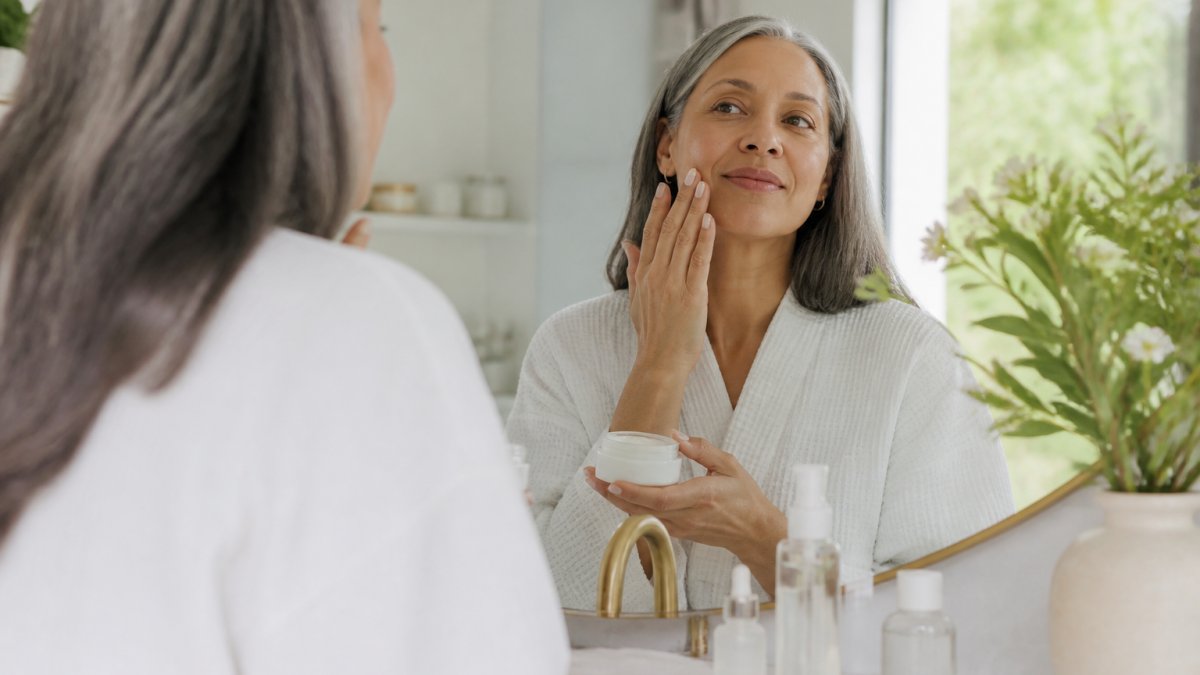
Step-by-Step: Building Your Gentle Routine
- Cleanse with lukewarm water and a mild, fragrance-free cleanser. Pat dry, do not rub.
- Moisturize while skin is damp. Use a fragrance-free cream suited to your dryness level.
- Protect with sunscreen on exposed skin, and reapply if you are outdoors.
- Patch test any new product on your inner arm for a few days first.
- Simplify if irritation appears. Drop back to cleanse and moisturize only.
Watch out: introducing a new active ingredient mid-treatment can trigger irritation that is hard to calm. Ask your care team before adding anything new. A night cream like our Restore Night Cream ($49.99) can complete the routine with richer overnight moisture.

When to See a Dermatologist for Skin Changes
See a dermatologist for skin changes when you notice a rash that spreads, skin that cracks or bleeds, a sore that will not heal, or sudden changes to a mole.
The American Academy of Dermatology's guidance on when to see a dermatologist recommends professional evaluation for persistent or worsening skin symptoms. Bring a list of your medications and products.
If you are also deciding what to put on your skin, our guide to choosing beauty products during cancer treatment walks through what to check on a label.
How Long Do Hormone-Related Skin Changes Last?
How long hormone-related skin changes last depends on the therapy, your age, and how your body responds. Some women see improvement within weeks of starting a gentle routine. Others notice changes that come and go for months. There is no single timeline, and that is normal.
Track what you notice:
| What to Track | Why It Helps | How Often |
|---|---|---|
| Dryness level | Shows if your moisturizer is working | Weekly |
| New redness or bumps | Flags possible irritation | Daily |
| Product changes | Connects symptoms to a cause | Each change |
| Questions for your care team | Keeps concerns from slipping | Before each visit |
Individual variation is large. Clinical evidence on hormone therapy and skin is still evolving, so treat any promised timeline with caution.
Skin Changes From Non-Menopause Hormone Therapy
Most of what you will read about hormones and skin assumes menopause. But the phrase "hormone therapy" covers a much wider range of treatments, and the skin changes people experience on those regimens are real, under-discussed, and worth understanding on their own terms. This is the part of the conversation the standard guides tend to skip.
Which Therapies Can Affect Skin
Hormone-related treatments that can influence skin include:
- Gender-affirming hormone therapy, which may involve estrogens, androgens, or anti-androgens, depending on the person and the regimen.
- Fertility treatment, which typically involves short courses of estrogen and progesterone alongside other medications.
- Thyroid hormone replacement, which affects metabolism broadly and can influence skin dryness and texture when levels are not yet stabilized.
Each of these works differently, and the skin response follows the mechanism. Estrogen-dominant regimens tend to shift skin toward dryness and barrier fragility. Androgen-dominant regimens can increase oil production and breakouts. Anti-androgens may reduce oil. Steroids can thin skin over time. This is why a single "hormone therapy skincare routine" cannot fit everyone, and why the specifics of your regimen matter.
Dose and Delivery Method Change the Picture
How a hormone is delivered shapes how much reaches the skin and how steady the exposure is. A daily pill produces different peaks and troughs than a patch, gel, or injection. Topical formulations applied to the skin can have local effects where they are applied. Dose matters too: a low-dose regimen and a high-dose regimen are not the same experience for your skin.
What to Do When You Notice a Change
A practical approach:
- Note the timing. Write down the date you started or changed a medication and the date you first noticed a skin symptom. Patterns are easier to see in writing than in memory.
- Photograph changes in consistent lighting so you can track whether something is improving, stable, or worsening.
- Simplify your routine to a gentle cleanser, a fragrance-free moisturizer, and sunscreen while you figure out what is happening.
- Tell your prescribing clinician about skin symptoms at your next visit, and sooner if they are severe, spreading, or painful.
- Do not stop or change a prescribed therapy on your own. This is the most important point in this section. Hormone therapies are prescribed for reasons that matter, and any adjustment should be a conversation with the clinician who manages your care.
Realistic Expectations
Some people find that skin symptoms ease as the body adjusts to a new regimen. Others find that changes persist for as long as the therapy continues.
If you are also thinking about what to put on your skin during this time, our guide to choosing beauty products during cancer treatment walks through what to check on a label, and our advisory board information explains how we approach formulation questions for sensitive skin.
Your Next Step: Choosing Products That Respect Changing Skin
Choosing products that respect changing skin comes down to fewer ingredients, clear labels, and no fragrance. Our fragrance-free moisturizer guide walks through how to pick one for reactive skin. Fragrance is one of the most common causes of irritation in sensitive skin, which is why every Lotus Beauty Co. formula is fragrance-free, talc-free, and paraben-free.
Best for: anyone building a minimal routine during or after treatment. Skip if: you are looking for exfoliating or anti-aging actives right now.
Frequently Asked Questions
Can hormone therapy make skin dry or more sensitive?
Yes. Hormone therapy can affect the skin barrier, leading to dryness, tightness, and increased sensitivity. Declining estrogen, for example, is linked to reduced collagen and hyaluronic acid, which can make skin feel less supple and more reactive. If you notice new dryness or stinging, switch to a gentle, fragrance-free moisturizer and a mild cleanser, and let your care team know about persistent changes.
How should I adjust my skincare routine during hormone therapy?
Simplify and focus on comfort. Use a mild, fragrance-free cleanser, a supportive moisturizer, and broad-spectrum sunscreen daily. Avoid harsh scrubs, alcohol-based toners, and strong active ingredients unless cleared by your dermatologist. A routine like our [The Daily Ritual](https://lotusbeautyco.com/products/the-daily-ritual) ($89.99), which pairs Awaken Day Cream and Restore Night Cream, can provide consistent moisture without overwhelming sensitive skin. Always patch-test new products and introduce one at a time.
Can HRT make skin look better?
Some studies suggest that systemic hormone replacement therapy may help maintain skin thickness, collagen, and hydration, but results vary widely depending on hormone type, dose, and individual factors. Topical estrogen has also been studied for skin aging. However, HRT is not a cosmetic treatment and carries its own risks. Any visible benefits should be discussed with your clinician, and skincare should focus on gentle support rather than expecting dramatic reversal.
When should I contact my care team about a skin change?
Reach out if you notice a new rash, severe itching, blistering, open sores, or a sudden change in a mole. Also contact your team if dryness or sensitivity becomes painful or interferes with daily life. These could be signs of an allergic reaction, infection, or another condition that needs medical attention. Early communication helps you get the right care without guessing.
Your skin may keep changing, and that can feel unsettling. You do not have to figure it out alone. Lotus Beauty Co. offers fragrance-free, dermatologist-tested skincare guided by oncology and dermatology advisors, with full ingredient transparency so you know exactly what you are putting on your skin. Get started with Lotus Beauty Co. and give your skin a routine that feels calm, simple, and yours.
