
Choosing Beauty Products During Cancer Treatment
Table of Contents
- Why Your Skin Changes During Treatment
- How to Read Ingredient Labels When Choosing Beauty Products During Cancer Treatment
- Building a Simple Skincare Routine for Chemotherapy Patients
- Tips for Sensitive Skin During Radiation Therapy
- Choosing a Fragrance Free Moisturizer for Sensitive Skin
- Makeup and Scalp Care: Gentle Options That Work
- Budget-Friendly Safe Beauty Alternatives and Post-Treatment Transition
- When to Talk to Your Oncology Team
- Frequently Asked Questions
Last Updated: September 30, 2026
Why Your Skin Changes During Treatment
Chemotherapy and radiation change how skin behaves. Many women find their complexion becomes dry, reactive, and quick to sting within the first few weeks of treatment.
How to Read Ingredient Labels When Choosing Beauty Products During Cancer Treatment
Reading a label well is the single most useful skill you can build. You do not need to memorize every ingredient, just know which to skip, which to trust, and how to spot the ones hiding behind friendly wording.
A Safe vs. Avoid Framework
Ingredients and categories to avoid while skin is reactive
- Added fragrance and "parfum." Fragrance is a common cause of contact irritation and can hide dozens of compounds under one word. "Natural" scent is not automatically gentler; essential oils like citrus, peppermint, lavender, and eucalyptus are frequent irritants.
- Denatured alcohol (alcohol denat., SD alcohol, isopropyl alcohol). These evaporate quickly and can leave skin tight and drier than before. Not every alcohol is a problem: cetyl, stearyl, and cetearyl alcohol are fatty alcohols that soften and stabilize, and are usually fine.
- Sulfates (sodium lauryl sulfate, sodium laureth sulfate). They create foam but can strip the barrier and leave skin tight.
- Physical scrubs and strong acids. Walnut shell, sugar, and salt scrubs, plus glycolic, lactic, and salicylic acids, can be too much for skin in treatment. Retinoids and retinols fall in the same category for now.
- Parabens and talc. Many women prefer to skip these.
- Formaldehyde-releasing preservatives (DMDM hydantoin, diazolidinyl urea, imidazolidinyl urea). Some people react to these; if your skin is reactive, set them aside.
Ingredients and categories to look for
- Barrier-supporting emollients and humectants: squalane, shea butter, jojoba, glycerin, panthenol, ceramides, and hyaluronic acid.
- Soothing botanicals with a gentle track record: colloidal oatmeal, allantoin, and bisabolol.
- Mineral UV filters: zinc oxide and titanium dioxide, which sit on top of skin rather than absorbing into it.
The Label Loopholes to Know
- "Fragrance-free" vs. "unscented." Fragrance-free means no added scent. Unscented often means a masking fragrance was added. If your skin is reactive, choose fragrance-free.
- "Hypoallergenic" is not a regulated term. It signals intent, not a guarantee. Read the ingredient list anyway.
- "Natural" and "clean" are marketing words, not safety words. A plant extract can irritate skin as easily as a synthetic one.
- "Dermatologist-tested" does not mean tested on treatment-affected skin. Ask what that testing meant for your situation.
A Short Verification Checklist
Before you buy, run through these five questions:
- Does the full ingredient list appear on the label or the brand's website? If not, that is your answer.
- Is "fragrance" or "parfum" anywhere on the list?
- Are any drying alcohols or sulfates in the first five ingredients?
- Does the formula contain a barrier-supporting ingredient near the top?
- Is the packaging clear about what the product is for and who it is made for?
If you want to check a specific formula, our Ingredient Index lists exactly what is in each product, and our advisory board reviews our formulations with sensitive skin in mind. When in doubt, bring the product to your oncology or dermatology team. They can tell you whether it fits your situation.
Building a Simple Skincare Routine for Chemotherapy Patients
A good routine for chemotherapy patients is short: cleanse, moisturize, protect. Three steps, morning and night. Simple routines are kinder to skin that is already working hard.
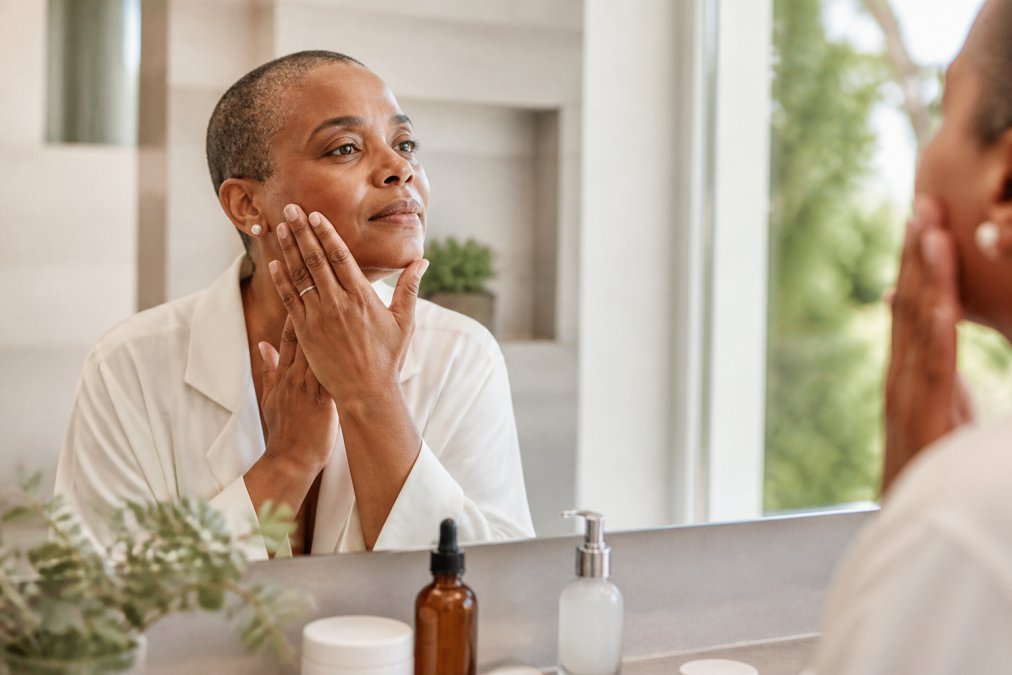
Step-by-Step: Cleanse, Moisturize, Protect
- Cleanse gently. Use lukewarm water and a mild, fragrance-free cleanser or micellar water. Skip hot water and washcloths.
- Pat dry. Never rub. Leave skin slightly damp.
- Moisturize while damp. Lock in water with a rich, fragrance-free cream. This is the step that rebuilds your barrier.
- Protect every morning. Apply broad-spectrum sunscreen, even indoors near windows.
- Repeat at night. A richer cream overnight supports skin while you rest.
A two-step day and night set makes this easy. Our The Daily Ritual pairs a light day cream with a richer night cream, so you are not juggling ten products.

Tips for Sensitive Skin During Radiation Therapy
Radiation-treated skin needs extra care. The treated area can become red, dry, and tender, and it may react to products that were fine before.
- Use only lukewarm water on the treated area.
- Skip anything with fragrance, alcohol, or exfoliants.
- Moisturize often, not just once a day.
- Wear loose, soft clothing over treated skin.
- Ask your radiation team before applying anything new to that area.
Choosing a Fragrance Free Moisturizer for Sensitive Skin
A fragrance-free moisturizer for sensitive skin is the workhorse of any gentle routine. It replaces what treatment strips away and helps your barrier recover. Look for:
- Fragrance-free, not just unscented.
- Barrier-supporting ingredients like squalane, shea butter, and jojoba.
- No drying alcohols or sulfates.
- A texture you will actually use. Light for day, rich for night.
| Step | Product Type | When | What to Look For |
|---|---|---|---|
| Cleanse | Gentle cleanser or micellar water | AM + PM | Fragrance-free, sulfate-free |
| Moisturize | Day cream | Morning | Lightweight, hydrating |
| Moisturize | Night cream | Evening | Rich, barrier-supporting |
| Protect | Mineral sunscreen | Morning | Broad-spectrum, fragrance-free |
Makeup and Scalp Care: Gentle Options That Work
You can still wear makeup and care for your scalp. You just need formulas built for reactive skin.
Hypoallergenic Makeup
Look for hypoallergenic, fragrance-free makeup with buildable coverage. Heavy, matte formulas can settle into dry patches and feel tight.
Scalp Care and Hair Loss
Hair loss is common with some treatments, and it can be one of the hardest parts. A few gentle habits help:
- Use a mild, fragrance-free shampoo.
- Wash less often and use lukewarm water.
- Avoid tight hats, harsh brushes, and heat styling.
- Keep the scalp moisturized and protected from sun.
Budget-Friendly Safe Beauty Alternatives and Post-Treatment Transition
Safe Beauty does not have to be expensive, and it does not end when treatment does. Here is how to build a gentle routine on a realistic budget, and how to think about the months after treatment.
Building a Gentle Routine on a Budget
You can build a solid routine with three products: a mild cleanser, one fragrance-free moisturizer, and a mineral sunscreen. Everything else is optional.
- Buy a day-and-night set instead of single jars. The formulas are designed to work together.
- Choose multi-use products. A rich fragrance-free cream can work on face, hands, and cuticles. A gentle cleanser can double as a body wash.
- Skip the extras first. Toners, essences, and serums are nice, not necessary. Add them only if your skin is asking for something specific.
- Read the ingredient list before you buy. A drugstore moisturizer with a short, fragrance-free formula can do the same job as a prestige one.
- Watch for sales and refill options.
- Ask your care team about samples. Some oncology centers and patient navigators keep fragrance-free samples on hand.
The Post-Treatment Transition: A Slow, Deliberate Return
Here is a framework that many women find manageable:
- Keep the simple routine going. Cleanser, moisturizer, sunscreen. Do not rush back to a ten-step regimen just because treatment is over.
- Reintroduce one active at a time. When you and your care team agree it is time, pick one ingredient to bring back, such as a gentle lactic acid or a low-strength retinol. Use it once or twice a week at first.
- Give each new product two to four weeks. If your skin tolerates it, slowly increase frequency. If it stings, flakes, or turns red, stop and go back to your basics.
- Patch test on a small area first. The inner forearm or the side of the jaw is a good spot. Wait 24 to 48 hours before applying it more widely.
- Reassess with your dermatologist. If you are managing long-term skin effects from treatment, your dermatologist can guide the pace of reintroduction.
A few things to keep in mind:
- Retinoids and strong acids are usually the last things to bring back, not the first. They are effective, and also the most likely to cause a reaction on skin that is still recovering.
- Sunscreen matters more than ever. Treated skin can be more sensitive to UV, and daily broad-spectrum protection supports the skin's own repair process.
- Your skin may never go back to exactly what it was. That is not a loss. It is a new baseline, and a good routine can meet you there.
- Emotionally, this stage can be its own adjustment. Returning to "normal" beauty routines can feel complicated. Take it at your own pace, and let your routine serve you.
If you are not sure where to start, our virtual shade matching can help you find makeup that works with your current skin, and our advisory board reviews our formulations with sensitive skin in mind. Your oncology or dermatology team is always the best guide for what is right for you.
When to Talk to Your Oncology Team
Some skin changes need a doctor's eye, not a new moisturizer. Call your care team if you notice:
- Open sores, blisters, or peeling
- Signs of infection, like warmth, swelling, or pus
- Sudden rash or hives
- Severe pain or itching that disrupts sleep
Frequently Asked Questions
What ingredients should I avoid in skincare during cancer treatment?
Dermatologists often suggest avoiding added fragrance, essential oils, denatured alcohol, sulfates, parabens, and harsh exfoliants because they can trigger irritation when your skin barrier is compromised. Look for short, transparent ingredient lists. Lotus Beauty Co. publishes a full Ingredient Index so you can verify every component before applying it. Always patch-test new products and review the list with your oncology or dermatology team, since sensitivity varies by treatment type and stage.
How does chemotherapy affect skin sensitivity?
Chemotherapy can reduce oil production, thin the skin, and slow cell turnover, leaving your barrier less able to retain moisture or defend against irritants. Many people notice dryness, redness, itching, or heightened reactions to products they previously tolerated. This is why fragrance-free, pH-balanced formulas and gentle cleansing matter more during treatment. If you develop a rash, blistering, or severe pain, contact your care team promptly rather than trying a new product on your own.
Why is a fragrance free moisturizer for sensitive skin recommended during treatment?
Fragrance is one of the most common causes of contact irritation, and treatment-affected skin reacts faster and more intensely. A fragrance-free moisturizer supports barrier function without added sensitizers. Lotus Beauty Co. Awaken Day Cream and Restore Night Cream are both 100% fragrance-free and formulated with argan oil, squalane, and shea butter to support comfort and lasting moisture. Apply to slightly damp skin after cleansing to help lock in hydration.
Should I consult my oncology team before changing my beauty products?
Yes. Your oncology or dermatology team knows your specific treatment, medications, and skin history, so they can flag ingredients or timing that matter for you. Bring your current product list and any new items you are considering. This is especially important during radiation, when the treatment field needs extra care. Lotus Beauty Co. formulas are dermatologist tested for irritation and sensitization, but individual guidance from your care team always comes first.
Treatment can make your skin feel unfamiliar, and the beauty aisle can feel like one more thing to figure out. Lotus Beauty Co. makes that choice simpler with fragrance-free, dermatologist-tested formulas built for sensitive skin, full ingredient transparency, and inclusive shades for every stage. Explore The Daily Ritual or our cosmetics collection to start a gentle routine that helps you feel more like yourself.