
Fragrance-Free vs. Unscented Skincare: What's the Difference?
Table of Contents
- Fragrance-Free vs. Unscented: What's the Actual Difference?
- How Masking Agents Work (and Why They Can Be a Problem)
- Why Fragrance-Free Is Often Better for Sensitive Skin
- How to Read Skincare Ingredient Labels for Hidden Fragrance
- Managing Skin Sensitivity During Medical Treatment
- Common Misconceptions About Fragrance in Skincare
- Choosing Products That Work for Your Skin
- Conclusion
- Frequently Asked Questions
Last Updated: September 7, 2026
When your skin becomes sensitive, the language on product labels starts to matter in a new way. The distinction between fragrance free vs unscented skincare is one of the most misunderstood in beauty, yet it can make a real difference for anyone dealing with dryness, irritation, or skin changes during medical treatment. At Lotus Beauty Co., we believe knowledge is a form of care, so we're here to help you decode these terms with confidence.
The most important thing to understand is that these two labels are not interchangeable. Unscented products often contain masking agents, which are added specifically to hide the odor of other ingredients. Fragrance-free means no fragrance ingredients have been added for scent at all. For women with sensitive or treatment-affected skin, this difference can determine whether a product brings comfort or contributes to irritation. Below, we'll walk through how to tell them apart, what to look for on an ingredient list, and how to choose products that honor where your skin is right now.
Fragrance-Free vs. Unscented: What's the Actual Difference?
The core difference comes down to intent. A product labeled unscented has had its natural scent neutralized or covered so it smells like nothing, but it may still contain fragrance chemicals or masking agents to achieve that neutral smell. A fragrance-free product, by contrast, contains no added fragrance ingredients, synthetic or natural, meaning nothing has been included for the purpose of scent.
This matters because masking agents are often the same types of chemical compounds that can trigger reactions in sensitive skin. The U.S. Food and Drug Administration's guidance on cosmetic labeling notes that terms like "unscented" are not strictly regulated, so manufacturers have some flexibility in how they use them. For anyone with reactive skin, reading the actual ingredient list matters more than trusting the front of the bottle.
How Masking Agents Work (and Why They Can Be a Problem)
When a formulator wants to create a product that smells like nothing, they have two paths: leave out all fragrance materials, or add a masking agent to cover the sometimes-unpleasant odors of fatty acids, plant oils, or preservatives. The second approach is common in conventional skincare, and it's where the label gets tricky.
A masking agent doesn't remove an odor; it overwhelms or neutralizes it at the receptor level. This is often achieved with complex chemical blends that are not required to be listed individually on a label. Under U.S. labeling regulations, these blends can simply be listed as "fragrance" or "parfum," even if their purpose is to make a product smell like nothing at all. This means an "unscented" cream could still contain a cocktail of synthetic compounds designed to suppress the smell of its base ingredients.
What are some of these compounds? While formulations are proprietary, common odor neutralizers and masking agents include:
- Benzyl benzoate: Often used as a solvent and fragrance fixative.
- Benzyl salicylate: Used to absorb UV light and as a fragrance stabilizer.
- Citral, citronellol, geraniol, and limonene: These are terpenes, often derived from citrus or other botanicals, that are frequently used in fragrance blends, even at low levels, to create a fresh or neutral profile.
- Certain phthalates (like DEP): Historically used to help fragrances last longer, though their use has declined due to safety concerns.
For someone with sensitive or reactive skin, this matters. The American Academy of Dermatology identifies fragrance as one of the most common causes of allergic contact dermatitis. The compounds listed above are all recognized as potential allergens by organizations that track skin sensitization. A product that claims to be unscented may therefore contain more potential irritants than a truly fragrance-free formula, which skips this entire category of ingredients.
This is why we always recommend flipping the bottle over. If you see "fragrance" or "parfum" in the ingredient list, the product contains these compounds, regardless of what the front label says about being unscented. At Lotus Beauty Co., we formulate all of our skincare as 100% fragrance-free, meaning we never add fragrance or masking agents, so you don't have to decode a proprietary blend to know what your skin is absorbing.
Why Fragrance-Free Is Often Better for Sensitive Skin
For skin that is already vulnerable, fragrance-free skincare tends to be the safer choice. When your skin barrier is compromised, whether from chemotherapy, radiation, or simply a reactive season, it is more easily penetrated by potential irritants. Fragrance-free products remove one entire category of those irritants from the equation.
This is not about labeling fragrance as "toxic" or universally harmful. Many people enjoy scented products without any issue. But for those experiencing dryness, peeling, or heightened sensitivity, the National Eczema Association's guidance on fragrance-free products recommends avoiding fragrance entirely, including masking agents, because even trace amounts can provoke a response. The key is understanding your own skin and giving it the gentlest options when it is asking for support.
How to Read Skincare Ingredient Labels for Hidden Fragrance
Learning to spot hidden fragrance takes practice, but it becomes second nature quickly. The goal isn't to become a cosmetic chemist; it's to become a confident label reader who can make informed choices for your skin.
Step 1: Scan for the obvious. Look for the words "fragrance," "parfum," "aroma," or "perfume" in the ingredient list. If any of these appear, the product contains added scent, no matter what the front of the package claims. This is the most direct signal.
Step 2: Look for botanical extracts used as scent. Many natural ingredients are added for their aroma rather than their skin benefits. Common culprits include lavender oil, rose extract, citrus oils (like bergamot or orange), eucalyptus, peppermint, and geranium. These are not always labeled as "fragrance" because they are technically plant extracts, but they function as fragrance and are common allergens. The National Eczema Association specifically recommends avoiding these botanicals for people with eczema-prone skin.
Step 3: Understand the "unscented" loophole. A product labeled "unscented" may still contain a masking agent, which we discussed in the previous section. If you see "fragrance" or "parfum" listed, it's not truly fragrance-free. Some products use the term "fragrance-free" but still include botanical extracts for scent; this is where reading the full list matters.
Step 4: When in doubt, patch test. This is the most practical habit you can develop, especially when your skin is already sensitive. Here's a simple protocol dermatologists often recommend:
- Choose a small, discreet area, like the inside of your forearm or behind your ear.
- Apply a small amount of the product to the area.
- Leave it on for 24 to 48 hours. Cover it with a bandage if needed to keep it in place.
- Watch for any redness, itching, burning, or bumps. If you experience any of these, wash the area gently and discontinue use.
- If you have no reaction after 48 hours, it's generally considered safe to try on a small area of your face, like your jawline, for a few more days before full application.
This isn't a guarantee against future reactions, as allergic contact dermatitis can develop over time with repeated exposure, but it significantly reduces the risk of a sudden, uncomfortable surprise.
At Lotus Beauty Co., we believe in transparency. We publish a full Ingredient Index so you can look up exactly what is in each formula and why. When you're reviewing our products, you'll see that we never use fragrance, masking agents, or essential oils, so you can trust that what's on the label is exactly what your skin is getting.
Managing Skin Sensitivity During Medical Treatment
During cancer treatment, skin changes are common and can be profound. Chemotherapy and radiation can leave skin feeling raw, dry, and reactive in ways that are entirely new. In this context, choosing fragrance-free skincare may help reduce unnecessary irritation, but it is essential to remember that everyone's experience is different. What works for one woman may not work for another, and your oncology or dermatology care team is the best resource for your individual needs.
The American Cancer Society's skincare recommendations during treatment emphasizes gentle cleansing and moisturizing to support the skin barrier. It also advises consulting your care team before introducing new products. If you are unsure whether a product is right for you during active treatment, a simple conversation with your care team can provide clarity. Our role at Lotus Beauty Co. is to serve and support, not to replace the guidance of your medical professionals.
Common Misconceptions About Fragrance in Skincare
Several myths circulate about fragrance in skincare, and clearing them up can help you make more informed choices. One misconception is that "natural" fragrance is always safer than synthetic fragrance. In reality, natural essential oils are common allergens, and some botanical extracts can be more irritating than their synthetic counterparts. The source of the fragrance is less important than whether your skin reacts to it.
Another misconception is that a product must smell like something to be effective. Many people associate pleasant scents with efficacy, but a fragrance-free moisturizer can be just as nourishing as a scented one. Similarly, some believe that if a product doesn't cause an immediate reaction, it is safe, but allergic contact dermatitis can develop over time with repeated exposure. This is why many dermatologists recommend fragrance-free options for anyone with a history of skin sensitivity or eczema-prone skin.
Choosing Products That Work for Your Skin
When you are ready to choose products, start by identifying your skin's current needs. If you are experiencing dryness and tightness, look for a fragrance-free moisturizer with ceramides, squalane, or shea butter to support the skin barrier. If you are in the middle of treatment and uncertain about what your skin can tolerate, simplicity is your friend. A short ingredient list with recognizable components is often easier for sensitive skin to accept than a complex formula.
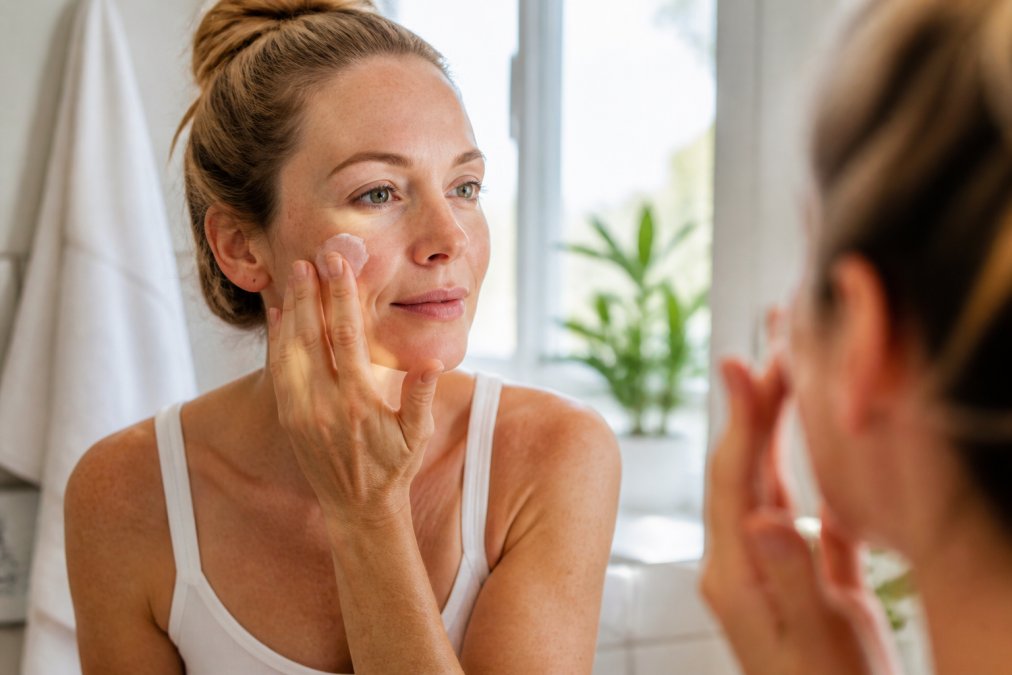
For daily comfort, our Awaken Day Cream offers soft, non-greasy hydration with aloe and soothing botanicals, while Restore Night Cream provides richer nourishment overnight with argan oil and squalane. Both are 100% fragrance-free, talc-free, and paraben-free, formulated with full ingredient transparency in mind. If you prefer a complete routine, The Daily Ritual pairs both creams together for morning-to-evening care.


The table below summarizes how to approach your product selection based on your skin's current state:
| Skin Situation | What to Look For | Ingredients That Help | Products to Consider |
|---|---|---|---|
| Mild dryness | Fragrance-free moisturizer | Ceramides, glycerin | Awaken Day Cream |
| Significant sensitivity | Short ingredient list | Squalane, aloe | Restore Night Cream |
| Treatment-related changes | Minimal added ingredients | Shea butter, jojoba | The Daily Ritual |
Conclusion
Understanding the difference between fragrance free vs unscented skincare is a small but meaningful step toward caring for your skin with intention. When your skin is sensitive or changing, choosing fragrance-free products removes one potential source of irritation, but the most important guide is always your own experience and the advice of your care team. You deserve products that feel safe, comfortable, and respectful of everything your skin has been through.
At Lotus Beauty Co., we formulate with this exact need in mind: 100% fragrance-free, dermatologist-tested, and made with full ingredient transparency. Explore our skincare collection to find gentle, effective options that support your skin without asking you to compromise on comfort. Give your skin the calm, considered care it deserves.
Frequently Asked Questions
Which is better for sensitive skin: unscented or fragrance-free?
Fragrance-free is generally the better choice for sensitive or reactive skin. While unscented products have no added perfume scent, they may still contain masking agents or other fragrance ingredients to neutralize the odor of raw materials. Fragrance-free, on the other hand, means fragrance ingredients have not been intentionally added at all, which reduces the potential for irritation.
Can unscented products still contain fragrance ingredients?
Yes. The term "unscented" typically means a product has no perceptible smell, but formulators may add a masking fragrance to hide the unpleasant odor of other ingredients. These masking agents can trigger a reaction in sensitive skin. This is why reading the ingredient list matters as much as checking the label claims.
How can I identify hidden fragrances on an ingredient label?
Look for terms like "parfum" or "fragrance" on the ingredient list. Also watch for botanical extracts and essential oils, which are added for scent. Masking agents might not be listed as "fragrance" but can appear as separate chemical names. When in doubt, our Ingredient Index can help you decode unfamiliar terms and identify products designed to be gentle.
Is fragrance in skincare always harmful to the skin?
No. Fragrance is not universally harmful, and many people use scented products without issue. However, fragrance is one of the most common causes of allergic contact dermatitis. For individuals with compromised skin barriers or heightened skin sensitivity during medical treatment, the risk of irritation increases, which is why fragrance-free options are often preferred.