
What Cream Makeup Works for Dry Skin During Cancer Treatment?
Last Updated: October 27, 2026
Quick Summary
Cream makeup works well for dry skin during cancer treatment because cream formulas stay flexible and can be pressed into the skin instead of swept across flakes. Choose fragrance-free cream sticks, liquid creams, or tinted moisturizers, apply with warm fingertips, and skip setting powder on dry areas.
- Press cream products in with clean fingertips rather than buffing, since sweeping motions lift flakes.
- Skip setting powder on dry areas because cream and liquid formulas set on their own.
- Patch test new products on a small area first, following FDA advice on cosmetics and skin reactions.
- Choose fragrance-free formulas, as fragrance is a common cause of contact reactions in cosmetics.
- Skip makeup and call your oncology team if you notice open skin, oozing, spreading redness, or worsening pain.
Table of Contents
- Why Dry Skin During Cancer Treatment Changes How Makeup Behaves
- Choosing Cream Makeup for Dry, Sensitive Skin
- Cream, Liquid, or Stick: Matching the Texture to Your Symptom
- How to Apply Makeup to Flaky Skin Without Making It Worse
- Why Fragrance-Free Makeup for Sensitive Skin Matters
- A Gentle Makeup Routine During Chemotherapy, Step by Step
- When to Skip Makeup and Call Your Care Team
- Finding Your Shade and Building a Comfortable Kit
- Frequently Asked Questions
Why Dry Skin During Cancer Treatment Changes How Makeup Behaves
Cream makeup products for dry skin during cancer treatment work differently than they do on skin that isn't in treatment. That's the short answer, and it matters more than any product list. Skin under treatment holds less water, sheds unevenly, and reacts faster to friction. A formula that glides on smooth skin can catch, cling, and highlight every flake within an hour.
The makeup you wore for years may suddenly look different on changing skin. It isn't you. It's the surface.
What treatment does to the skin barrier
The skin barrier is the outer layer that holds moisture in and keeps irritants out. Chemotherapy and radiation can weaken it. The National Cancer Institute's guidance on skin and nail changes during treatment notes that skin can become dry, itchy, peeling, and more sensitive during cancer treatment. Less water in the surface layers means makeup sits on top of dry cells instead of blending into them.
Why powder and matte formulas can make flaking look worse
That single difference explains most of what follows.
Choosing Cream Makeup for Dry, Sensitive Skin
Start with the ingredient list, not the shade range. For dry, sensitive skin, the formula matters more than the finish.
Here's our short checklist before you buy anything:
If you want to see a buildable option, our liquid foundation for dry skin is made in 15 shades.

Cream, Liquid, or Stick: Matching the Texture to Your Symptom
A quick definition first: a cream formula is an oil-and-water emulsion that stays flexible on the skin, while a powder is a dry, oil-absorbing format. That single difference drives most of the choices below.
Start with the symptom, then pick the format
| What your skin is doing | Best format | Why it helps | What to avoid |
|---|---|---|---|
| Flaking or visible shedding | Cream stick, pressed in with fingertips | Targeted coverage that doesn't sweep across flakes | Buffing brushes, powder over flakes |
| Tight, thirsty feeling | Liquid cream or tinted moisturizer | More emollient slip, spreads without tugging | Matte or long-wear formulas |
| Redness or uneven tone | Cream concealer, layered thin | Buildable, precise coverage | Heavy all-over layers |
| Reactive or stinging skin | Short-ingredient liquid cream | Fewer potential triggers, lighter feel | Anything with added fragrance |
| Dull, tired-looking tone | Tinted moisturizer | Sheer wash of color, minimal product | Full-coverage formulas on good-skin days |
Flaking skin
Flakes lift when anything drags across them. A cream stick warmed between clean fingertips and pressed only where you need coverage tends to blur texture better than a liquid swept over the whole face. Keep the layer thin. Two light presses beat one heavy swipe.
Tight, thirsty skin
When skin feels tight, a liquid cream or tinted moisturizer moves more freely and needs less pressure to blend. Let your moisturizer settle for a few minutes first so the makeup has a comfortable base. If a formula still tugs, you likely need more moisturizer underneath, not more makeup.
Redness and uneven tone
Cream concealer is the most efficient tool here. Dot a small amount on the area, press, and stop. Over-layering to chase perfect coverage is what makes concealer look cakey on dry skin. A sheer layer that softens the look of redness usually wears better than a full mask.
Reactive, easily irritated skin
On days when skin stings or reacts quickly, check with your care team before using makeup.
A note on format and finish
If you are comparing options, our cream concealer for dry skin and cream stick foundation are available to explore, and our cosmetics collection lists finish and coverage for each.


How to Apply Makeup to Flaky Skin Without Making It Worse
Press, don't drag. That is the whole technique in two words. Flakes lift when a brush or sponge sweeps across them, so the goal is to press product into the skin with minimal friction and stop before texture becomes the focus.
Why pressing works better than sweeping
Dry, treatment-affected skin has less flexibility at the surface. A sweeping motion catches the edges of flakes and pushes them up, which is why coverage can look patchy within an hour. Pressing with warm fingertips softens the product and lays it down without lifting the surface. It also uses less product, which matters when skin is reactive.
The gentle application sequence
- Cleanse gently with lukewarm water and a soft cloth. Hot water and scrubbing strip the surface further.
- Moisturize while skin is still slightly damp, then let it settle for a few minutes so makeup has a comfortable base.
- Patch test anything new on a small area, following FDA advice on cosmetics and skin reactions, and wait before applying it to the full face.
- Use less than you think. One pump of liquid or one light swipe of a stick is usually enough for the whole face.
- Press with fingertips, starting at the center of the face and working outward. Avoid buffing brushes and stiff sponges on dry areas.
- Build only where needed. Add a second thin layer on uneven tone rather than a heavier first layer everywhere.
- Skip setting powder on dry areas. Cream and liquid formulas set on their own, and powder pulls moisture from the surface.
- Remove gently at night with a soft cleanser and lukewarm water. No scrubbing, no exfoliating pads, no hot cloths.
Tools: what to reach for and what to leave alone
| Tool | Use it for | Skip it when |
|---|---|---|
| Clean fingertips | Pressing cream and liquid formulas | Never, on dry skin this is often best |
| Damp soft sponge | Light blending on smooth areas | Skin is flaking or fragile |
| Buffing brush | Rarely, on healthy skin | Any active dryness or sensitivity |
| Powder brush | Not needed on dry areas | Always, during a dry phase |
Layering without heaviness
Thin layers wear better than one thick one. If you need more coverage, let the first layer settle for a minute, then press a small amount only on the area that needs it. This keeps texture from building up and makes removal easier at the end of the day.
When to stop and call your care team
Some skin is not a makeup problem. Skip makeup and contact your oncology team if you notice open skin, oozing, spreading redness, swelling, or pain that is getting worse. The American Cancer Society's information on skin changes during treatment recommends talking with your care team about skin problems rather than treating them yourself. Makeup is cosmetic. It cannot treat a rash, an infection, or a radiation reaction, and product use should never override clinical guidance.
For a fuller walkthrough, our guide on how to apply makeup without irritating sensitive skin goes step by step.
Why Fragrance-Free Makeup for Sensitive Skin Matters
Fragrance is one of the most common causes of contact reactions in cosmetics. For skin already made reactive by treatment, added scent is an unnecessary risk. The American Academy of Dermatology's guidance on fragrance allergy explains that fragrance is a frequent trigger for skin reactions, even in products marketed as gentle.
This is why we build every Lotus formula without added fragrance. If you want a broader look at options, our guide to non-irritating makeup for cancer patients covers what to check and what to skip.
A Gentle Makeup Routine During Chemotherapy, Step by Step
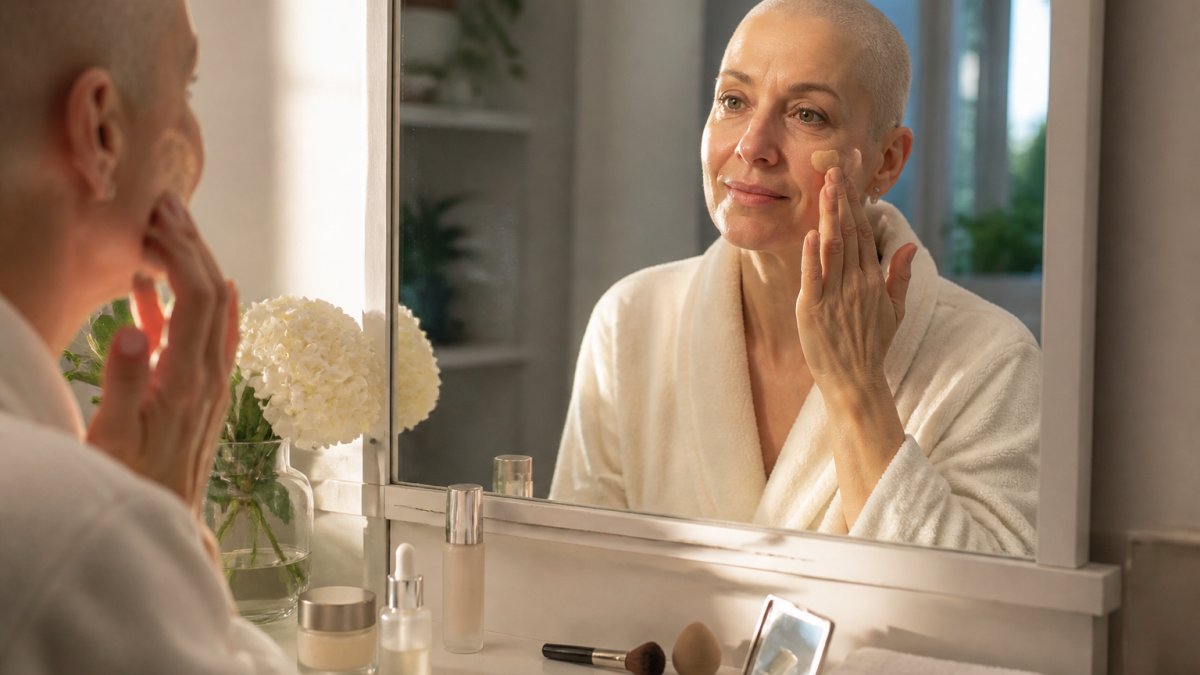
- Cleanse gently with lukewarm water and a soft cloth.
- Moisturize while skin is still slightly damp.
- Patch test new products on a small area first, per FDA advice on cosmetics and skin reactions.
- Apply cream foundation with fingertips, one thin layer.
- Add cream concealer only where tone is uneven.
- Skip powder. Let cream products set on their own.
- Remove gently at night with a soft cleanser, no scrubbing.
When to Skip Makeup and Call Your Care Team
Some days, the right choice is no makeup at all. Skip it and call your oncology team if you notice open skin, oozing, spreading redness, swelling, or pain that's getting worse. The American Cancer Society's information on skin changes during treatment recommends talking with your care team about skin problems rather than treating them yourself.
Makeup is cosmetic. If you have a medical concern, contact your care team.
Finding Your Shade and Building a Comfortable Kit
Our Beauty Stick Foundation, Cream Concealer Mirrored Palettes, and Multi-Use Color Stick are options to explore.
Our Virtual Try-On / Find My Shade and Ingredient Index are available to explore. Our cosmetics collection includes inclusive options across tones.
Frequently Asked Questions
What makeup is suitable for dry, sensitive skin during cancer treatment?
Lotus Beauty Co.'s [Hydrating Liquid Foundation](https://lotusbeautyco.com/products/hydrating-liquid-foundation-15-shades) ($48.00) and [Beauty Stick Foundation](https://lotusbeautyco.com/products/beauty-stix-foundation-30-shades) ($46.00) are both made without added fragrance, parabens, sulfates, or drying alcohols. Ask your oncology team before applying anything to radiated skin.
How can I apply cream makeup to dry or flaky skin?
If an area is actively peeling or broken, check with your care team before applying makeup.
Is fragrance-free makeup better for sensitive skin?
Lotus Beauty Co. products are fragrance-free. Check the ingredient information and ask your care team if you have questions about a product.
Should I check with my oncology team before trying new makeup?
Yes. Ask your oncology team about your individual needs before trying new makeup during treatment, especially on radiated skin.
Dry skin during treatment asks a lot of your patience, and your makeup shouldn't add to the load. Lotus Beauty Co. makes fragrance-free, dermatologist-tested cosmetics and skincare designed with sensitive, changing skin in mind, including formulas reviewed by oncology and dermatology advisors. Start with one gentle product, patch test it, and build from there. Get started with Lotus Beauty Co. and find a routine that feels like you again.
