
Non-Irritating Makeup for Cancer Patients: A Safe Beauty Guide
Last Updated: October 22, 2026
Quick Summary
Non irritating makeup for cancer patients is fragrance-free, paraben-free, and formulated with hydrating ingredients that support sensitive, changing skin during chemotherapy, radiation, or hormone therapy. Look for lightweight, breathable formulas tested for irritation and free of drying alcohols, sulfates, and heavy silicones.
- Fragrance is a common irritant even in natural formulas; always check ingredient lists for fragrance-free labeling.
- Liquid foundations and cream formulas hydrate better than powders during treatment and don't settle into dry patches.
- Patch test any new product on inconspicuous skin for 24 hours before applying to your face.
- Apply makeup gently with minimal tugging, use less product than you think you need, and build coverage gradually.
- Stop using any product immediately if it causes stinging, redness, swelling, or discomfort, and speak with your care team if irritation persists.
Table of Contents
- Why Non-Irritating Makeup Matters During Cancer Treatment
- Makeup During Chemotherapy: What Changes and What to Look For
- Fragrance-Free Makeup for Sensitive Skin: Why It Matters
- Makeup for Dry Skin During Chemo: Hydration-First Formulas
- Makeup Ingredients to Avoid During Chemotherapy
- Our Recommended Non-Irritating Makeup Products for Treatment-Affected Skin
- How to Apply Non-Irritating Makeup Safely: Patch Testing and Best Practices
- Frequently Asked Questions
Why Non-Irritating Makeup Matters During Cancer Treatment
When your skin changes during chemotherapy, radiation, or hormone therapy, the makeup you've always used might suddenly sting or feel uncomfortable. Your skin barrier becomes more sensitive, and dryness and redness can intensify.
At Lotus Beauty Co., we understand that treatment reshapes not just your skin, but your relationship with beauty rituals. Choosing safely means knowing what to look for: fragrance-free formulas, minimal irritants, breathable coverage, and products tested for sensitive skin.
This guide covers what changes in your skin during chemotherapy, which ingredients to avoid, how to patch test safely, and our recommended products for sensitive skin.
Makeup During Chemotherapy: What Changes and What to Look For
Chemotherapy, radiation, and hormone therapy affect the skin barrier in different ways. Understanding these changes helps you choose products that won't add to irritation.
During chemotherapy, many women experience dryness, sensitivity, and sometimes redness or peeling as the skin's protective layer becomes compromised (Skin and Nail Changes and Cancer Treatment - Side Effects). Radiation can cause localized redness, burning, and texture changes in the treated area (Skin and Nail Changes and Cancer Treatment - Side Effects). Hormone therapy might trigger acne, dryness, or unpredictable sensitivity.
When choosing makeup during treatment, look for formulas that are:
- Fragrance-free: Added fragrance is one of the most common irritants, even in products labeled "natural" or "clean." It serves no skin-care function and can trigger stinging, redness, or allergic reactions on sensitive skin.
- Free of drying alcohols: Alcohol denat and other volatile alcohols strip moisture from already-dry skin, making irritation worse.
- Paraben-free and sulfate-free: These preservatives and cleansing agents can irritate compromised skin barriers.
- Lightweight and breathable: Heavy foundations trap heat and sweat, increasing irritation. Buildable, flexible coverage lets you use less product where you need it most.
- Formulated for sensitive skin: Products tested specifically for irritation and sensitization on compromised skin are your safest bet.
Fragrance-Free Makeup for Sensitive Skin: Why It Matters
Fragrance is invisible in ingredient lists but unmistakable on your skin. Even "natural" fragrance from essential oils or plant extracts can trigger irritation, stinging, or allergic reactions on sensitive skin, and synthetic fragrance does the same.
Many brands add fragrance to feel luxurious or mask the smell of other ingredients. Fragrance-free makeup for sensitive skin removes this trigger entirely.
When shopping for fragrance-free products, read the full ingredient list carefully. Look for:
- No "fragrance," "parfum," "essential oil blend," or "natural fragrance" listed
- No masking fragrance agents like "masking fragrance" or unlisted scent compounds
- Clear labeling that states "fragrance-free" or "unscented"
Be aware that "unscented" sometimes means the product has a masking fragrance added to hide other smells, it's not the same as fragrance-free. Always check the ingredient list to be sure.
Makeup for Dry Skin During Chemo: Hydration-First Formulas
Dryness during chemotherapy is common, and regular makeup often makes it worse. Matte or powder-heavy foundation clings to dry patches and can feel tight. Makeup for dry skin during chemo needs to hydrate while providing coverage.
Hydration-first formulas work by:
- Blending smoothly without settling into fine lines or dry patches: Lightweight liquids and creams move with your skin rather than sitting on top of it.
- Supporting your skin's moisture barrier: Formulas with conditioning ingredients help your skin feel softer and more comfortable throughout the day.
- Providing flexible, buildable coverage: You can apply less product to dry areas and build coverage where you need it, rather than using a heavy all-over base.
Liquid foundations and cream sticks work better than powders during treatment because they don't absorb moisture from your skin. Cream concealers and blushes blend without emphasizing dryness. Nourishing lipsticks with conditioning ingredients like castor oil and shea butter feel softer than matte formulas.
Makeup Ingredients to Avoid During Chemotherapy
Knowing which ingredients to avoid matters as much as knowing what to look for. Some common makeup ingredients can trigger irritation on sensitive skin.
Avoid these ingredients during chemotherapy:
- Fragrance and essential oils: Even in tiny amounts, fragrance can cause stinging or redness on sensitive skin.
- Drying alcohols: Alcohol denat, SD alcohol, and similar volatile alcohols strip moisture and compromise the skin barrier.
- Parabens and sulfates: These preservatives and cleansing agents are common irritants on compromised skin.
- Heavy silicones: While some silicones are fine, heavy silicone loads can feel occlusive and uncomfortable on sensitive skin.
- Talc: Talc can be irritating and is best avoided during treatment. Look for talc-free formulas.
- Synthetic dyes and colorants: Some synthetic colors can irritate sensitive skin; natural mineral pigments are gentler.
- Menthol, camphor, and cooling agents: These feel refreshing but can irritate treatment-affected skin.
Read ingredient lists carefully. If you're unsure about a specific ingredient, ask your oncology or dermatology care team before trying it on your face.
Our Recommended Non-Irritating Makeup Products for Treatment-Affected Skin
We've selected products designed for women navigating cancer treatment. Each avoids common irritants, prioritizes comfort, and delivers the coverage and color you want.
Foundation and Coverage
Hydrating Liquid Foundation ($48.00) is our top choice for everyday coverage during chemotherapy. This lightweight formula provides buildable coverage without feeling heavy or mask-like, blends seamlessly, and comes in 15 inclusive shades.

If you prefer a cream formula with more staying power, the Beauty Stick Foundation ($46.00) glides on without dragging or tugging.
For targeting dark circles, redness, or uneven tone, the Cream Concealer Mirrored Palettes ($52.00) offer gentle correction without heaviness. The creamy texture blends smoothly and builds gradually, softening the appearance of discoloration without feeling cakey.
Eyes and Brows
Eyes and brows often change during treatment: lashes may thin, brows may become sparse, and the delicate eye area becomes extra sensitive.
The Mechanical Eyeliner Pencil ($26.00) delivers clean definition without tugging.
For longer-lasting definition, the Mechanical Waterproof Gel Eyeliner Pencil ($32.00) sets to a waterproof finish while maintaining a soft, creamy feel during application.
The Mechanical Brow Stick ($28.00) helps you shape and define delicate or thinning brows with soft precision. The creamy texture lets you build definition gradually, creating natural-looking hair-like strokes.
Lips and Cheeks
Lips often become dry and delicate during chemotherapy, and traditional lipsticks can feel uncomfortable. Our lip and cheek products prioritize comfort.
The Nourishing Lipstick ($28.00) is formulated with conditioning ingredients like castor oil and shea butter, so color doesn't come at the cost of comfort.
For a lighter option with hydrating shine, the Lip Glaze ($26.00) delivers sheer to buildable color in 10 shades. Conditioning emollients help soften dry lips while adding a natural, light-reflecting shine without stickiness.
The Multi-Use Color Stick ($38.00) works on cheeks, lips, and eyes, so you can create a cohesive look with minimal products. The balm-like texture melts into skin and feels lightweight all day.
For a more complete lip and cheek look, the Dual Lip & Cheek Mirrored Palette ($58.00) offers cream-based color that blends smoothly without tugging.
| Product | Best For | Key Benefit | Price |
|---|---|---|---|
| Hydrating Liquid Foundation | Everyday coverage during treatment | Buildable, hydrating, 15 shades | $48.00 |
| Beauty Stick Foundation | Precise application and touch-ups | Smooth, creamy, 30 shades | $46.00 |
| Cream Concealer Palettes | Targeting redness and dark circles | Gentle correction, blendable | $52.00 |
| Mechanical Eyeliner Pencil | Soft eye definition | Creamy, glides without tugging | $26.00 |
| Mechanical Brow Stick | Defining thinning brows | Natural-looking, buildable | $28.00 |
| Nourishing Lipstick | Comfortable lip color | Conditioning formula, 17 shades | $28.00 |
| Lip Glaze | Hydrating lip shine | Conditioning emollients, 10 shades | $26.00 |
| Multi-Use Color Stick | Cheeks, lips, and eyes | One product, three uses | $38.00 |
| Dual Lip & Cheek Palette | Complete lip and cheek color | Cream-based, blendable | $58.00 |
How to Apply Non-Irritating Makeup Safely: Patch Testing and Best Practices
Applying non-irritating makeup safely starts before it touches your face.
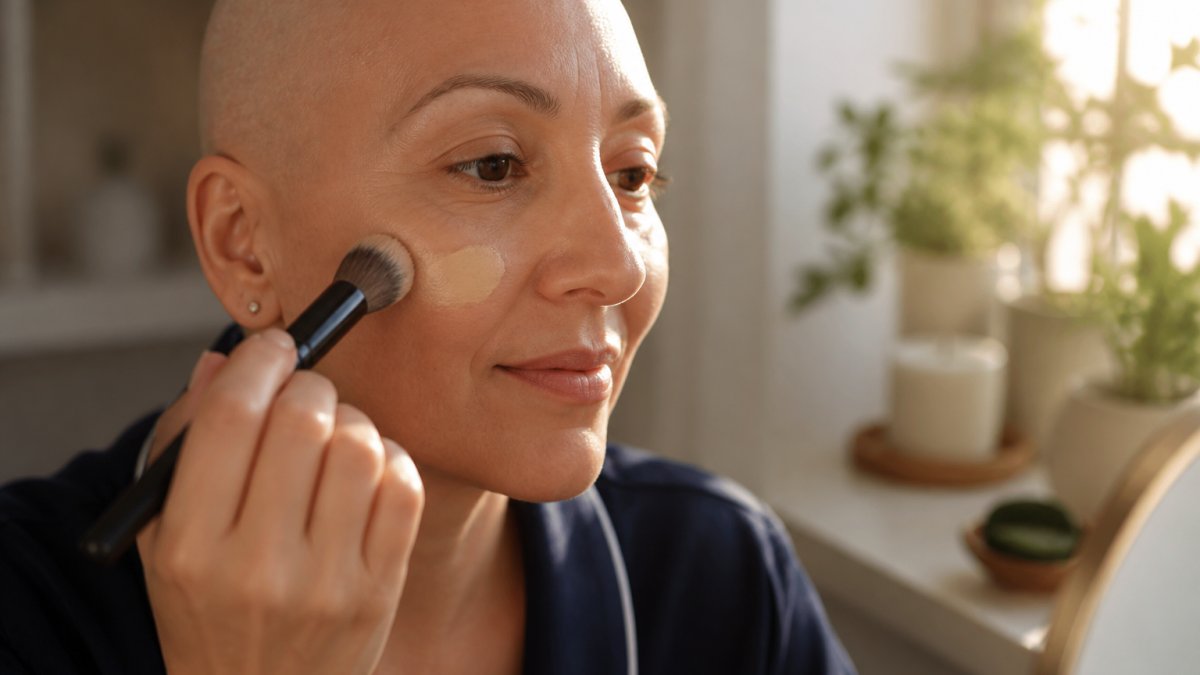
Patch Testing: The Essential First Step
If the patch test goes well after 24 hours, you can try the product on your face.
Application Tips for Sensitive Skin
Use clean brushes and tools every time.
Apply products gently, using light pressure and minimal tugging.
Less is often more. Use less product than you think you need, and build coverage gradually.
When to Stop Using a Product
If a product causes stinging, redness, swelling, or any irritation, stop using it immediately.
Finding non irritating makeup for cancer patients means choosing products designed for sensitive, changing skin.
At Lotus Beauty Co., we've created our entire collection with this understanding.
Explore our Ingredient Index to understand exactly what's in every product, or use our virtual shade matching to find your perfect foundation shade from home.
Frequently Asked Questions
What is the best non-irritating makeup for cancer patients?
The best non-irritating makeup for cancer patients is fragrance-free, paraben-free, and formulated without drying alcohols or harsh surfactants. Look for products specifically designed for sensitive or treatment-affected skin, with minimal ingredients and full transparency about what's inside. Hydrating formulas that support moisture are especially helpful during chemotherapy and radiation. Our Hydrating Liquid Foundation and Beauty Stick Foundation are designed specifically for this purpose, offering buildable coverage without heaviness or irritation.
Should I avoid fragrance in makeup during chemotherapy?
Yes, fragrance is one of the most common irritants during cancer treatment. Both synthetic fragrances and essential oils can trigger sensitivity, redness, and discomfort on already-compromised skin. Fragrance-free makeup reduces the risk of unexpected reactions and allows your skin to heal without additional stressors. When choosing makeup during chemotherapy, always check the label for 'fragrance-free' rather than 'unscented,' which may still contain masking fragrances.
What makeup ingredients should I avoid during chemotherapy?
During chemotherapy, avoid parabens, sulfates, synthetic fragrances, essential oils, drying alcohols, talc, and heavy waxes that can clog pores or irritate sensitive skin. Also skip products with strong preservatives or colorants that may trigger reactions. Instead, choose formulas with simple, recognizable ingredients and no added fragrance. Our Ingredient Index can help you understand what's in each product and make informed choices aligned with your skin's needs.
How do I apply makeup when my skin is dry or sensitive during chemo?
Start with a hydrating moisturizer as your base to support your skin barrier. Use a light hand and blend gently with fingertips or a soft brush rather than dragging products across your face. Choose hydrating formulas like our Hydrating Liquid Foundation, which moves with your skin without feeling heavy. Apply concealer only where needed, and consider cream formulas like our Cream Concealer Mirrored Palettes, which blend smoothly without tugging. Always patch test new products on a small area first, and stop using anything that causes discomfort.
When should I talk to my oncology or dermatology team about makeup during treatment?
Speak with your care team if you experience persistent redness, swelling, burning, or rash after using any product, or if you're unsure whether makeup is appropriate for your specific treatment stage. Your oncologist or dermatologist can advise based on your individual skin condition and treatment plan. They can also recommend patch testing protocols and help you identify products that align with your care.
