
Best Fragrance-Free Skincare for Radiation in 2026
Table of Contents
- Why Fragrance-Free Skincare Matters During Radiation
- What to Look for in Fragrance-Free Skincare for Radiation
- Our Top Fragrance-Free Skincare Picks for Radiation
- How to Apply Moisturizer During Radiation
- Ingredients to Avoid in Radiation Skincare
- Building a Radiation Dermatitis Skin Care Routine
- Sun Protection and Post-Treatment Skin Care
- Frequently Asked Questions
Last Updated: September 15, 2026
Why Fragrance-Free Skincare Matters During Radiation
Radiation therapy can leave skin feeling raw, tight, and unpredictable, and fragrance is one of the most common triggers of further irritation. This is why so many women searching for the best fragrance free skincare for radiation end up overwhelmed by options that all sound the same. At Lotus Beauty Co., we hear this question constantly: what is actually safe to put on skin that is this sensitive?
Here is the short answer. Fragrance-free skincare is the gentler choice during radiation because added fragrance can provoke irritation on skin that is already stressed. The American Cancer Society notes that skin in the treatment area needs extra care during radiation, including gentle cleansing and moisturizing American Cancer Society guidance on skin care during radiation. Fragrance is a frequent cause of contact reactions even in healthy skin, so removing it is one of the simplest ways to reduce risk.
Below, we walk through what radiation does to your skin, which ingredients help, and how to apply moisturizer so it actually comforts rather than stings.
What Radiation Does to Your Skin Barrier
Radiation damages the skin's outer layer, weakening the barrier that normally holds moisture in and irritants out. This is why skin in the treatment site can look red, feel warm, flake, or sting. Clinicians call this radiation dermatitis, and it can range from mild pinkness to peeling and discomfort.
When the barrier is compromised, anything you apply sits closer to living skin. Fragrance, dyes, and drying alcohols that never bothered you before can suddenly cause stinging or redness. That is the core reason fragrance-free formulas matter during treatment.
What to Look for in Fragrance-Free Skincare for Radiation
Look for short, transparent ingredient lists built around moisturizing and soothing ingredients, with no added fragrance, dye, or drying alcohol. The goal is simple: support skin hydration and comfort without introducing anything likely to irritate.
A few things worth checking on any label:
- "Fragrance-free" rather than "unscented," since unscented products can still contain masking fragrance
- No dyes, which add color but no benefit for sensitive skin
- Hypoallergenic and non-comedogenic formulas where possible
- Ingredients like humectants, emollients, and soothing botanicals
Key Ingredients That Support Sensitive Skin
Humectants draw water into the skin. Glycerin and aloe are familiar examples.
Emollients soften and smooth. Think shea butter, jojoba, and squalane.
Soothing agents calm the look of redness. Aloe and oat-derived ingredients are common choices.
Lotus Beauty Co. builds its creams around this trio. Our ingredient index lists every ingredient we use, so you can review each one with your care team before you commit.
Why Fragrance-Free, Dye-Free, and Paraben-Free Matters
Each of these three choices removes a common source of irritation. Fragrance is the leading cause of allergic contact dermatitis in cosmetics, according to the American Academy of Dermatology American Academy of Dermatology on fragrance and skin reactions. Dyes add no skincare benefit. Parabens are preservatives some women prefer to avoid, and choosing paraben-free formulas is a personal decision many make during treatment.
None of this means other products are unsafe. It means that when your skin is reactive, fewer potential triggers is a reasonable strategy.
Our Top Fragrance-Free Skincare Picks for Radiation
Lotus Beauty Co. formulas are built specifically for sensitive, treatment-affected skin and are 100% fragrance-free, dye-free, and paraben-free. Here are the products we reach for most.
Product |
Price |
Best For |
Key Ingredients |
|---|---|---|---|
$45.99 |
Light daytime hydration |
Aloe, argan oil, jojoba, shea butter |
|
Restore Night Cream |
$49.99 |
Overnight nourishment |
Argan oil, jojoba, shea butter, squalane |
The Daily Ritual |
$89.99 |
Complete morning-to-night routine |
Both creams together |
Return to Self Gift Set |
$94.00 |
Gifting to someone in treatment |
Both creams plus cosmetic bag |
Awaken Day Cream: Lightweight Comfort for Daytime
Awaken Day Cream is a soft, non-greasy daily moisturizer made for skin that has changed. Aloe and moisture-loving ingredients help hydrate dry, thirsty skin, while argan oil, jojoba, shea butter, and soothing botanicals comfort and nourish. It layers well under sunscreen, which matters if your treatment site is exposed to daylight.

Heavy creams can feel suffocating on reactive skin, and Awaken stays light enough to wear all day.
Restore Night Cream: Richer Nourishment Overnight
Restore Night Cream brings richer moisture without the heaviness. Argan oil, jojoba, shea butter, squalane, and soothing botanicals help nourish dry, depleted-feeling skin while supporting softness and the skin's natural moisture barrier overnight. If your skin feels tight by evening, this is the one to reach for.
The Daily Ritual: A Complete Morning-to-Night Routine
The Daily Ritual pairs both creams at a lower combined price than buying them separately. Awaken handles daytime hydration; Restore does the heavier work overnight. For anyone who wants one decision instead of several, this is the simplest path.
If you are shopping for someone else and are unsure what to choose, the Return to Self Gift Set adds a soft cosmetic bag and makes a thoughtful, low-pressure gift.
How to Apply Moisturizer During Radiation
Apply moisturizer gently, in the direction of hair growth, and never rub the treatment site. Friction is its own form of irritation, and mechanical irritation on radiated skin can make redness worse. Use clean hands, and let each layer absorb before adding the next.
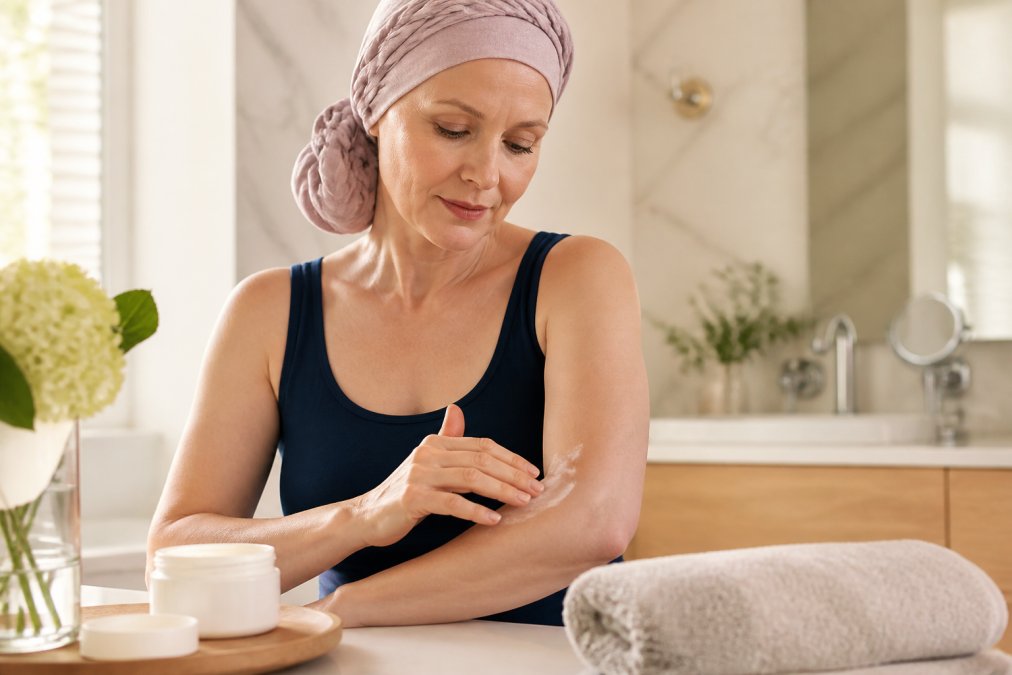
Step-by-Step Application Tips
- Wash your hands thoroughly before touching your skin.
- Cleanse with lukewarm water and a gentle, fragrance-free cleanser.
- Pat dry with a soft towel. Do not rub.
- Apply moisturizer within a few minutes, while skin is still slightly damp.
- Use a pea-sized amount per area and press it in with flat fingertips.
- Avoid the marked treatment field if your radiation team has told you to.
- Reapply as often as your care team recommends, usually two to three times daily.
A common mistake is applying product immediately before a radiation session. Ask your radiation team how they want the treatment area handled on session days, since guidance varies by clinic.
Ingredients to Avoid in Radiation Skincare
Avoid fragrance, dyes, drying alcohols, and anything that stings on contact. Ingredients to avoid in radiation skincare typically include added perfume, essential oils used for scent, alcohol denat, and exfoliating acids such as glycolic or salicylic acid, which can further strip a compromised barrier.
Lanolin deserves a specific mention. It is an effective emollient, but it is also a known allergen for some people, which is why many sensitive-skin lines choose lanolin-free formulas instead. If you have reacted to wool or lanolin before, skip it.
Building a Radiation Dermatitis Skin Care Routine
A radiation dermatitis skin care routine should stay short: cleanse gently, moisturize generously, and protect the area from sun and friction. Three steps, repeated consistently, do more than a shelf of products.
Cleansing, Moisturizing, and Protecting
Cleanse once or twice daily with lukewarm water and a fragrance-free cleanser. Hot water strips oil and worsens dryness.
Sun Protection and Post-Treatment Skin Care
Why Treated Skin Is More Sun-Sensitive
A Rough Timeline for Reintroducing Skincare
Reintroducing Actives Slowly
A few notes on common actives:
Keeping the Basics in Place
Frequently Asked Questions
What is the best skin care for radiation treatment?
The best approach is a gentle, fragrance-free routine that cleanses without stripping and moisturizes often. Look for hypoallergenic, non-comedogenic products with soothing agents like aloe, shea butter, and squalane. Avoid anything with fragrance, dyes, alcohol, or exfoliants. Always check with your oncology or dermatology team before starting new products, since your skin's needs can change during treatment.
Why is fragrance-free skincare recommended during radiation therapy?
Fragrance is one of the most common causes of allergic contact dermatitis, and during radiation your skin barrier is already compromised. Even a scent you tolerated before can trigger irritation, redness, or itching on a treatment site. Choosing fragrance-free skincare reduces the risk of adverse skin reactions and supports your skin's natural barrier while it recovers.
What ingredients should I avoid in skincare during radiation?
Skip products with synthetic fragrance, dyes, parabens, lanolin, alcohol, retinoids, alpha-hydroxy acids, and physical exfoliants. These can worsen erythema, desquamation, or mechanical irritation. Instead, look for humectants like glycerin, emollients like jojoba and argan oil, and soothing botanicals. A short, transparent ingredient list is easier to review with your care team.
How often should I apply moisturizer to radiation-affected skin?
Many oncology teams suggest moisturizing two to three times daily, or more if your skin feels dry or tight. Apply gently after cleansing with lukewarm water, and avoid rubbing the treatment site. If your skin is broken or weeping, ask your radiation nurse before applying anything. Consistency matters more than quantity, so a simple routine you can repeat daily works best.
Can I use regular lotion during radiation treatment?
Some regular lotions are fine, but many contain fragrance, dyes, or alcohol that can irritate compromised skin. Check the label and choose a fragrance-free, dye-free, paraben-free formula. If you are unsure, bring your product to your radiation oncology appointment and ask whether it is appropriate for your treatment area. Your care team's guidance should always come first.