
Safe Skincare During Radiation Therapy: A Complete Guide
Table of Contents
- Understanding Radiation-Induced Skin Reactions
- How to Soothe Radiation Skin Burns: Gentle Cleansing and Barrier Care
- Choosing an Oncology-Safe Moisturizer for Radiation
- Radiation Dermatitis Skincare Tips: Ingredients and Products to Avoid
- Fragrance-Free Skincare for Cancer Patients: Building Your Daily Routine
- Sun Protection and Long-Term Skin Care During and After Treatment
- When to Contact Your Oncology Team About Skin Changes
- Conclusion: Returning to Yourself Through Thoughtful Skincare
- Frequently Asked Questions
Last Updated: September 24, 2026
Understanding Radiation-Induced Skin Reactions
Radiation therapy targets cancer cells, but the beam also passes through healthy skin, causing changes that range from mild redness to more significant irritation. Your skin is responding to focused, high-energy treatment, this isn't a side effect you caused, and it's not a sign something is wrong.
The reaction typically progresses through stages. Early on, you might notice mild redness in the treatment area. As therapy continues, the skin may become dry, tender, and increasingly sensitive. Some women experience peeling, where the outer layer of skin sheds. These changes happen because radiation damages skin cells and disrupts the skin barrier, the protective layer that holds moisture in and irritants out.
Understanding what's happening helps you respond appropriately. The goal of safe skincare during radiation therapy is to minimize additional stress on compromised skin while maintaining hydration and barrier integrity.
At Lotus Beauty Co., we work closely with oncology and dermatology advisors to help women navigate these changes with confidence. The right routine simply makes this chapter more comfortable.
How to Soothe Radiation Skin Burns: Gentle Cleansing and Barrier Care
The foundation of safe skincare during radiation therapy is gentle cleansing that removes surface debris without adding mechanical irritation. This means avoiding friction, hot water, and harsh surfactants that strip away the skin's natural protective oils.
Use lukewarm water, not hot. When you apply cleanser, use your fingertips rather than a washcloth, sponge, or cleansing brush, they give you the most control and the least friction. Press the cleanser gently onto your skin in upward motions, then rinse thoroughly. Avoid circular scrubbing motions, even gentle ones, as they create unnecessary friction on compromised skin.
Pat your skin dry with a soft towel instead of rubbing. Patting means pressing the towel gently against your skin and lifting it away; rubbing involves dragging it across the surface, which can aggravate treated areas. If your skin feels tight or uncomfortable after cleansing, your cleanser may be too strong or your technique may be creating too much friction.
Look for low-pH cleansers, which are closer to your skin's natural acidity and less likely to disrupt the barrier. Avoid foaming cleansers, which tend to be more stripping. A milk or cream cleanser, fragrance-free, typically works best during active treatment.
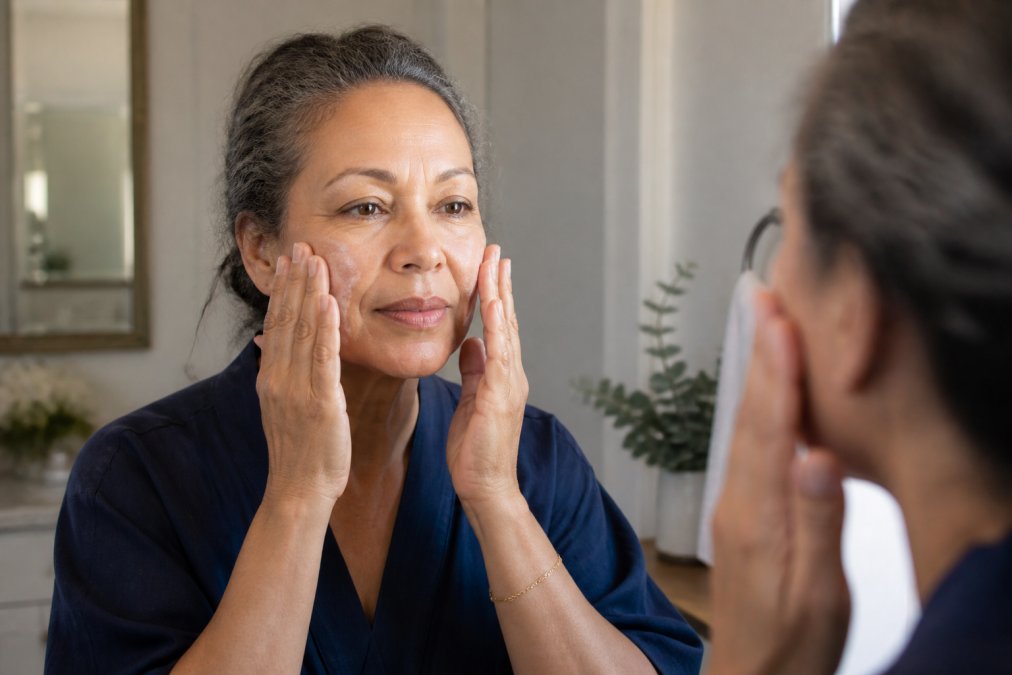
Apply moisturizer to damp skin immediately after cleansing, damp skin absorbs products more effectively and helps lock in hydration. Warm a small amount between your palms, then press it onto your face and neck rather than rubbing. If your skin feels raw or painful, simplify to just a gentle cleanser and nourishing moisturizer, skipping other steps until the acute phase passes.
Some women benefit from applying a soothing agent before moisturizer, a product with soothing botanicals can provide immediate comfort. Apply the same way: gently press onto skin rather than rubbing. Avoid experimenting with new ingredients or application methods during active treatment.
If your treated area feels particularly tender, use your ring finger to apply products, it naturally applies the least pressure, making it ideal for the most sensitive spots.
Choosing an Oncology-Safe Moisturizer for Radiation
An oncology-safe moisturizer for radiation hydrates, supports barrier repair, and causes no additional irritation. During treatment, your skin loses moisture faster than usual, so consistent hydration is essential.
Look for moisturizers with barrier-supporting ingredients. These work quietly without irritating treated skin.
Nourishing plant oils and butters matter too, especially during and after radiation. Shea butter, argan oil, jojoba oil, and squalane provide emollient support and soften skin. Squalane is particularly well-tolerated because it mimics the skin's own sebum without feeling greasy.
Avoid moisturizers with fragrance, essential oils, alcohol, or strong actives like retinoids, vitamin C serums, or alpha-hydroxy acids. Your oncology-safe moisturizer for radiation should feel calming, not active.
Many women find that using two moisturizers, a lighter one during the day and a richer one at night, works well. Our Lotus Beauty Co. Skincare collection includes Awaken Day Cream, which provides soft, comfortable hydration with aloe, argan oil, jojoba, and shea butter, and Restore Night Cream, which offers richer nourishment with squalane and soothing botanicals to support the skin barrier overnight.

Radiation Dermatitis Skincare Tips: Ingredients and Products to Avoid
Knowing what to avoid is as important as knowing what to add. During radiation therapy, your skin barrier is compromised, so irritants penetrate more easily and cause more damage.
Fragrance is the most common culprit, both synthetic fragrance and essential oils can irritate sensitive skin. Many women assume "natural" essential oils are gentler, but they're actually more likely to cause irritation during cancer treatment. Skip anything scented, even if subtle.
Avoid chemical exfoliants like alpha-hydroxy acids, beta-hydroxy acids, and retinoids, they dissolve or slough away skin cells, the opposite of what you need. Physical exfoliants like scrubs are equally problematic; friction causes mechanical irritation to already-damaged skin.
Alcohol-based products can be drying and irritating. Check ingredient lists for ethanol or alcohol denat, which appear in toners, astringents, and some "hydrating" products. If you're uncertain about specific ingredients, our Ingredient Index breaks down what's in our products and why we've chosen each component.
The same applies to sulfates and other harsh surfactants.
Avoid products with strong actives. Your skin needs support, not change.
If you're uncertain whether a product is safe for your skin during radiation, speak with your oncology or dermatology care team. They know your specific treatment and can advise on individual needs.
Fragrance-Free Skincare for Cancer Patients: Building Your Daily Routine
A fragrance-free skincare routine doesn't have to be complicated. Simpler is often better when your skin is sensitive.
Here's a basic structure that works for many women during active treatment:
Morning: Cleanse with lukewarm water and a gentle, fragrance-free cleanser. Apply moisturizer to damp skin. Add sun protection if you're going outside.
Evening: Cleanse gently.
Sun Protection and Long-Term Skin Care During and After Treatment
Sun protection during radiation therapy is critical. The treated area is more vulnerable to sun damage, and UV exposure can intensify radiation dermatitis.
Transitioning After Radiation Ends
Long-Term Skin Changes and What to Expect
Building Your Long-Term Routine
When to Contact Your Oncology Team About Skin Changes
Most radiation dermatitis is manageable with careful skincare, but some changes warrant professional attention. Know when to reach out to your oncology or dermatology care team.
Conclusion: Returning to Yourself Through Thoughtful Skincare
Safe skincare during radiation therapy isn't about achieving perfect skin, it's about supporting yourself through a demanding time and maintaining your dignity and comfort. Your skin is responding to treatment, and the right routine makes that response more manageable.
Frequently Asked Questions
What can I use on my skin during radiation treatment?
Stick with fragrance-free, gentle products specifically formulated for sensitive skin. Look for moisturizers with soothing ingredients like shea butter that support your skin barrier. Avoid anything with fragrance, alcohol, or active exfoliants. Your oncology team may recommend specific products; if not, ask your dermatologist for guidance. Patch-test any new product on a small area first to ensure it doesn't trigger irritation.
What ingredients should I avoid in my skincare during radiation therapy?
Avoid fragrances, essential oils, alcohol, acids (including AHAs and BHAs), vitamin C, retinoids, and mechanical exfoliants. These can irritate compromised skin or increase sensitivity. Skip products with sulfates or dyes. Also avoid anything with strong botanical extracts that may cause reactions. If you're unsure about an ingredient, check our Ingredient Index or ask your care team before introducing it to your routine.
How can I soothe skin irritation caused by radiation?
Cleanse gently with lukewarm water and a fragrance-free, low-pH cleanser. Pat skin dry without rubbing. Apply a rich, oncology-safe moisturizer while skin is still slightly damp to lock in hydration. Look for products with barrier-supporting ingredients like shea butter. Avoid hot water, tight clothing over treated areas, and direct sun exposure. If irritation persists or worsens, contact your oncology team.
Is it safe to use moisturizer before radiation treatment?
Yes, but timing matters. You can moisturize the night before and the morning of treatment. However, ask your radiation oncology team whether they prefer skin to be completely clear before your session, as some departments have specific protocols. After treatment, wait until any immediate sensitivity subsides before reapplying products. Always follow your care team's specific instructions, as protocols vary by facility.
How do I protect my skin from sun exposure during radiation therapy?
Sun protection is critical during and after radiation. Use a broad-spectrum SPF 30 or higher daily, even on cloudy days. Choose mineral sunscreens (zinc oxide or titanium dioxide) over chemical ones, as they're less likely to irritate sensitive skin. Reapply every two hours, especially after sweating or swimming. Wear protective clothing, hats, and seek shade when possible. Avoid direct sun exposure to treated areas for at least one year after completing radiation.
When should I contact my oncology team about skin changes?
Reach out if you notice severe redness, blistering, open sores, persistent pain, swelling, or signs of infection like warmth or drainage. Also contact them if over-the-counter care isn't managing irritation, if you develop an unexpected rash outside the treatment area, or if skin changes don't improve within a few weeks after treatment ends. Your team can assess whether you need additional support or a dermatology referral.
Why is ingredient transparency important during cancer treatment?
When your skin is compromised by radiation or chemotherapy, even small amounts of irritating ingredients can trigger significant reactions. Transparent ingredient lists let you identify potential triggers and avoid them. This matters because your immune system is often already managing treatment effects, and unnecessary skin irritation adds stress to your body. Knowing exactly what you're applying gives you control and confidence during a time when so much feels uncertain.
Caring for your skin during radiation therapy means choosing products and practices designed specifically for this moment. Lotus Beauty Co. is here to support you with Safe Beauty skincare that's oncology-safe, dermatologist-tested, and formulated without fragrance, talc, or parabens. Our Awaken Day Cream and Restore Night Cream provide the gentle hydration and barrier support your skin needs. Shop our complete skincare collection and discover products created with your wellbeing in mind.