
Oncology Safe Skincare Routine: A Complete Guide
Table of Contents
- Why Your Skin Changes During Cancer Treatment (and What That Means for Your Routine)
- The Core Principles of an Oncology Safe Skincare Routine
- Skincare During Chemotherapy: What to Expect and How to Adapt
- Skincare During Radiation Therapy: Protecting Treated Areas
- Choosing a Gentle Moisturizer During Cancer Treatment
- Face and Body Care During Cancer Treatment: A Step-by-Step Routine
- When Skin Symptoms Appear: What to Do and When to Call Your Care Team
- Conclusion
- Frequently Asked Questions
Last Updated: October 15, 2026
Why Your Skin Changes During Cancer Treatment (and What That Means for Your Routine)
An oncology safe skincare routine guide starts with one honest truth: your skin is not the problem to be fixed. It is responding to something real.
Skin changes happen because treatment affects how quickly cells turn over and how well the skin barrier holds moisture. When that barrier is compromised, water escapes faster and irritants get in more easily.
National Cancer Institute skin and nail changes during cancer treatment
Most oncology care teams will tell you the same thing: simplify. Fewer steps, fewer variables, fewer chances for a reaction.
The Core Principles of an Oncology Safe Skincare Routine
An oncology safe skincare routine is a short, consistent set of gentle steps that cleanse without stripping, moisturize without irritating, and protect skin from sun and friction. It avoids fragrance, dyes, alcohol, and harsh exfoliants, and it stays flexible enough to change as treatment changes.
Keep It Simple: Fewer Steps, Fewer Variables
A common mistake is treating sensitive skin as a reason to add more products. In practice, the opposite works better. A cleanser, a moisturizer, and sunscreen cover most needs. When something irritates your skin, a short routine makes it far easier to identify what caused it.
Read Labels Like a Detective: What to Look For and What to Skip
Fragrance-free is not the same as unscented, and "natural" does not mean gentle. Look for short ingredient lists, fragrance-free and dye-free formulas, and products described as hypoallergenic. Skip alcohol-heavy toners, physical scrubs, and anything with a strong scent, since fragrance is one of the most common causes of skin reactions. Our FDA information on cosmetic ingredients and labeling explains how to read what is actually on a label.
Skincare During Chemotherapy: What to Expect and How to Adapt
Skincare during chemotherapy should prioritize comfort over results. Many people notice dryness, itching, redness, or increased sensitivity, and some develop acne-like breakouts or darkened nails.
What makes chemotherapy different from other treatments is that it travels through the whole body, so skin changes can show up anywhere, not just in one area. That is why a full-body gentle routine tends to matter more here than a targeted one.
- Switch to a creamy, pH-balanced cleanser instead of foaming or exfoliating washes
- Apply moisturizer while skin is still slightly damp to lock in hydration
- Skip retinoids, acids, and strong exfoliators unless your oncologist approves them
- Use lukewarm water and keep showers short
- Patch test anything new on a small area first
- Keep nails trimmed and moisturized, since some regimens cause nail changes
If your care team has prescribed a specific cream for a rash or reaction, use that as directed and build the rest of your routine around it.
How Care Shifts Across Treatment Types and Phases
Radiation therapy. Changes tend to be concentrated in the treatment field rather than all over.
Targeted therapy. Some targeted therapies are associated with specific skin patterns, including rash-like eruptions, dryness, and sensitivity to sun.
Immunotherapy. Immune-related skin reactions can appear anywhere and sometimes arrive weeks after treatment begins.
Hormone therapy. Skin may become drier or thinner over time, and some people notice increased sensitivity.
Recovery after treatment. Skin often settles gradually, but sensitivity can linger.
National Cancer Institute skin and nail changes during cancer treatment
Skincare During Radiation Therapy: Protecting Treated Areas
Skincare during radiation therapy follows a different set of rules for the treated area. Skin in the radiation field can become red, dry, tender, or peel, and it needs gentle handling and clear guidance from your radiation team before you apply anything to it.
- Clean the treated area gently with lukewarm water and a mild cleanser, then pat dry
- Avoid rubbing, scratching, or using adhesive products on treated skin
- Skip fragrance, alcohol, and exfoliants on the treatment area entirely
- Ask your radiation team which moisturizer they recommend and when to apply it
- Protect treated skin from sun with clothing and sunscreen once your team says it is safe
Treated areas can stay sensitive long after treatment ends, so keep the routine gentle even as things improve.
Choosing a Gentle Moisturizer During Cancer Treatment
A gentle moisturizer during cancer treatment is one that supports the skin barrier without fragrance, dyes, or drying alcohol, and that feels comfortable enough to use every day. Look for ingredients like squalane, shea butter, and jojoba that soften and hold moisture, and choose formulas described as non-greasy and suitable for sensitive skin.
What Makes a Moisturizer Gentle Enough
Fragrance-free, dye-free, and short ingredient lists matter most. Thicker creams generally suit very dry or cracked skin, while lighter lotions work for daytime. If your skin stings on application, that is a signal to stop and check with your care team.
Layering Moisturizer for Lasting Comfort
Apply moisturizer within a few minutes of cleansing, while skin is still damp. For very dry skin, a lighter layer followed by a richer cream can help. Reapply during the day as needed, especially on hands and treated areas.
Face and Body Care During Cancer Treatment: A Step-by-Step Routine
Face and body care during cancer treatment works best as a short morning and evening sequence you can repeat without thinking. The steps below are designed to be gentle, flexible, and easy to adjust as your skin changes.
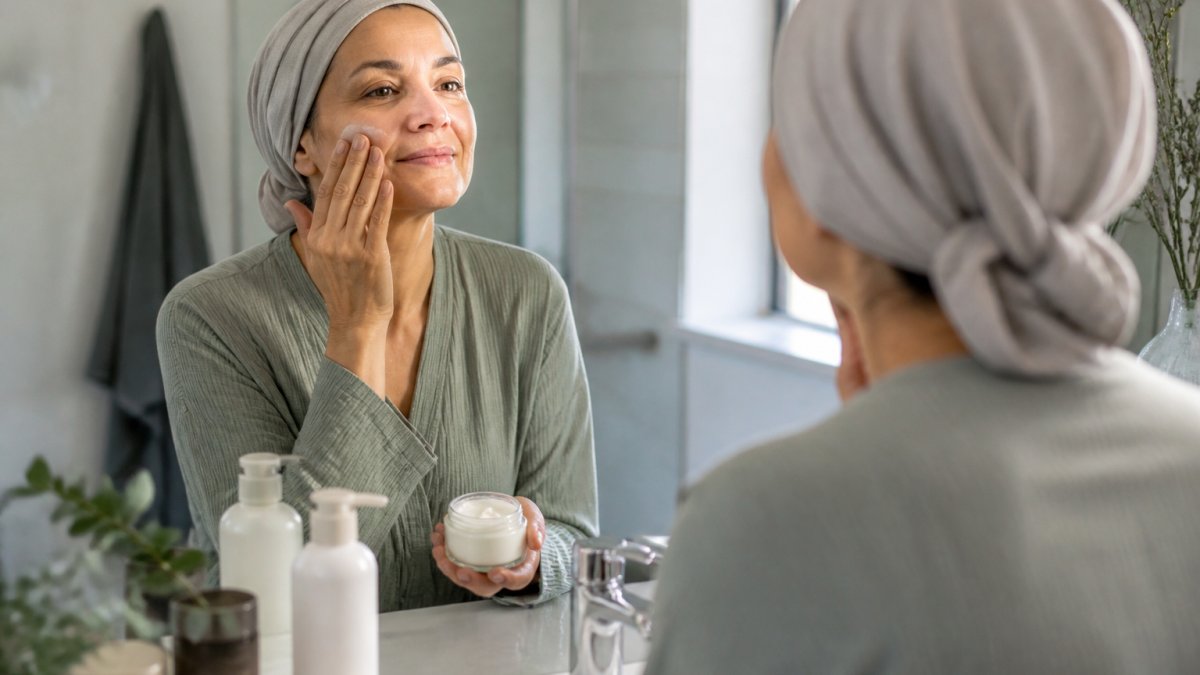
Morning Routine
- Rinse with lukewarm water, or use a mild cleanser if skin feels oily
- Pat dry with a soft towel, without rubbing
- Apply a lightweight moisturizer while skin is still damp, such as Awaken Day Cream, a fragrance-free daytime cream made with argan oil, squalane, and shea butter
- Apply sunscreen to exposed skin, once your care team confirms it is appropriate
- Add lip balm and reapply moisturizer to hands as needed
Evening Routine
- Gently remove makeup and sunscreen with a mild cleanser
- Avoid scrubbing, exfoliating, or using hot water
- Apply a richer moisturizer, such as Restore Night Cream, which combines argan oil, jojoba, shea butter, and squalane for overnight comfort
- Give skin a few minutes to absorb before lying down
If you would rather not think about pairing products, The Daily Ritual bundles the day and night creams into one simple two-step routine. For a caregiver looking for something thoughtful, the Return to Self Gift Set includes both creams and a soft cosmetic bag.


| Time of Day | Step | Product Type | What to Avoid |
|---|---|---|---|
| Morning | Cleanse | Mild, pH-balanced cleanser | Foaming or exfoliating washes |
| Morning | Moisturize | Lightweight fragrance-free cream | Scented lotions |
| Morning | Protect | Sunscreen, if approved | Harsh chemical sunscreens on treated skin |
| Evening | Cleanse | Creamy cleanser | Hot water, scrubbing |
| Evening | Moisturize | Richer fragrance-free cream | Retinoids, acids, exfoliants |
When Skin Symptoms Appear: What to Do and When to Call Your Care Team
Most skin symptoms during treatment are manageable, but some need prompt attention. Contact your oncology or dermatology care team if you notice open sores, blistering, peeling in the radiation field, a rash that spreads quickly, signs of infection such as warmth or pus, or pain that keeps getting worse.
For milder dryness, itching, or redness, pause new products, return to the simplest version of your routine, and give skin a few days to settle. If a symptom does not improve, or if you are unsure whether something is expected, call.
If you are choosing products for someone else, keep it simple and fragrance-free, and include a gift receipt so they can adjust if their skin reacts.
Conclusion
Skin changes during cancer treatment can feel like one more thing to manage on top of everything else, and you should not have to figure it out alone. Lotus Beauty Co. makes fragrance-free, dermatologist-tested skincare with full ingredient transparency, so you can build a short routine and get back to your day. Start with The Daily Ritual, explore our Ingredient Index to see exactly what is inside each formula, and check with your care team about what suits your skin right now.
Frequently Asked Questions
What skincare products are safe to use during cancer treatment?
There is no single list that applies to everyone, because safety depends on your treatment type, skin condition, and medical history. In general, gentle, fragrance-free cleansers and moisturizers with minimal ingredients are a practical starting point for an oncology safe skincare routine. Look for products labeled fragrance-free, dye-free, and hypoallergenic, and avoid exfoliators, alcohol-based toners, and anything with strong active ingredients. Always check with your oncology or dermatology care team before adding a new product, especially if your skin is broken, peeling, or reacting.
How should I care for my skin during chemotherapy?
Skincare during chemotherapy works best when it is simple and consistent. Use a mild, creamy cleanser with lukewarm water, pat skin dry instead of rubbing, and apply a fragrance-free moisturizer while skin is still slightly damp. Avoid hot showers, harsh scrubs, and products with alcohol or sulfates. If you notice new dryness, itching, or redness, note when it started and mention it to your care team. They can help you tell the difference between a normal treatment-related change and something that needs medical attention.
What should I avoid in skincare during radiation therapy?
During radiation therapy, the treated area needs extra care. Avoid applying anything to the treatment field that your radiation team has not approved, including lotions, creams, deodorants, and makeup. Skip products with fragrance, alcohol, exfoliating acids, and anything that could irritate or dry the skin further. Do not scrub, shave, or use adhesive bandages on treated skin unless your team says it is okay. Sun protection is important, but ask your radiation oncologist which sunscreen and when to start using it on the treated area.
Can I use moisturizer during cancer treatment?
Yes, a gentle moisturizer during cancer treatment is often helpful for dryness and comfort. Choose a fragrance-free, dye-free formula with ingredients like squalane, shea butter, or jojoba that support softness without irritating sensitive skin. Apply it after cleansing while skin is still damp to help hold in moisture. If you are receiving radiation, confirm with your radiation team before applying anything to the treated area, as some products can interfere with treatment or increase skin reactions.
How do I build a gentle skincare routine for sensitive skin?
Start with three steps: a mild cleanser, a fragrance-free moisturizer, and sun protection. Use lukewarm water, avoid rubbing or scrubbing, and introduce only one new product at a time so you can tell what works. Keep a short list of what you are using and when you started it. If your skin reacts, stop the newest product first. A routine that asks less of your skin is often the one that helps most. Your care team can help you adjust as your skin changes.
Should I ask my oncology team before trying a new skincare product?
Yes. Your oncology or dermatology care team knows your treatment plan, your skin history, and any medications that could interact with topical products. They can tell you whether a new cleanser, moisturizer, or sunscreen is appropriate, especially during active treatment or if you have radiation-treated skin. Bring the product or its ingredient list to your next appointment. A quick conversation can save you discomfort and help you avoid something that might interfere with your care.
Your skin may change week to week, and your routine should be able to change with it. Lotus Beauty Co. offers fragrance-free, dermatologist-tested skincare made for sensitive and treatment-affected skin, with ingredients listed openly and formulas designed to comfort rather than correct. Explore the Lotus Beauty Co. skincare collection and find a simple routine that helps you feel more like yourself.