
Is Mineral Makeup Worth It for Sensitive Skin?
Table of Contents
- What Makes Mineral Makeup Different
- Ingredients to Avoid in Sensitive Skin Makeup
- Real Benefits of Mineral Makeup for Sensitive Skin
- Fragrance Free Moisturizer for Sensitive Skin: Why It Matters
- Mineral vs. Traditional Foundation: What Actually Changes
- Choosing the Right Formula for Treatment-Affected Skin
- Is Mineral Makeup Worth the Switch?
- Frequently Asked Questions
Last Updated: September 29, 2026
What Makes Mineral Makeup Different
Whether is mineral makeup worth it for sensitive skin depends on understanding what sets it apart from liquid and powder foundations. The core difference lies in the base: mineral formulas use finely-milled mineral pigments like titanium dioxide and zinc oxide, while traditional foundations rely on synthetic binders and chemical stabilizers.
This matters because mineral makeup typically contains fewer ingredients overall. Where a liquid foundation might list 20-30 components, a mineral formula often has 5-10. Fewer ingredients mean fewer potential irritants, which is why many dermatologists recommend mineral options for people with compromised skin barriers.

However, not all mineral makeup is created equal. Some brands add bismuth oxychloride for shine and slip, a mineral that can trigger sensitivity in certain skin types. Others include talc, which may be problematic for post-procedure skin or those with respiratory concerns. The label "mineral" doesn't guarantee safety; it means understanding what's actually in the formula.
At Lotus Beauty Co., we focus on mineral-inspired formulations that prioritize both ingredient transparency and practical performance. Our approach avoids common irritants like parabens, synthetic fragrances, and drying alcohols that often cause flare-ups in treatment-affected skin.
Ingredients to Avoid in Sensitive Skin Makeup
Knowing what to skip is just as important as knowing what to choose. Certain ingredients appear regularly in conventional makeup but consistently trigger reactions in sensitive skin, especially during or after cancer treatment.
Synthetic fragrances top the list. Even when labeled "fragrance-free," many products contain fragrance compounds masked under other names. True fragrance-free formulas avoid all aromatic compounds entirely. If your skin is raw or inflamed, fragrance, even "natural" essential oils, can deepen irritation within hours.
Parabens are preservatives found in most conventional makeup. They're absorbed through the skin and can accumulate in sensitive tissue. For treatment-affected skin, the added burden isn't worth the shelf stability they provide.
Talc and talc-like minerals create texture and absorption but can irritate delicate skin and may complicate healing after radiation or chemotherapy. Talc-free alternatives like mica or iron oxides work just as well without the risk.
Drying alcohols (not all alcohols, some are beneficial) strip moisture from already-compromised skin barriers. Look for formulas that skip isopropyl alcohol and denat alcohol.
Synthetic dyes and colorants are another common irritant. Natural mineral pigments like iron oxides and titanium dioxide are gentler alternatives that deliver color without the inflammatory response.
Bismuth oxychloride, while technically a mineral, causes sensitivity in many people with reactive skin. It's used for shimmer and slip, but there are better options if your skin is prone to redness or texture issues.
The safest approach: read every ingredient. If you don't recognize a component, look it up. Brands that hide their formulations behind vague terms like "proprietary blend" aren't being transparent about what touches your skin.
Real Benefits of Mineral Makeup for Sensitive Skin
When formulated thoughtfully, mineral makeup does offer genuine advantages for sensitive skin. The benefits aren't marketing claims, they're grounded in how these formulas interact with compromised skin barriers.
Non-comedogenic properties are one of the strongest selling points. Mineral pigments don't clog pores the way some synthetic dyes do. For skin already dealing with inflammation from treatment, avoiding additional congestion matters. Loose mineral powders, in particular, allow skin to breathe better than heavy liquid foundations.
Buildable coverage without heaviness is another real advantage. You can apply mineral makeup in thin layers, building coverage gradually without that suffocating feeling that comes with thick liquid foundations. This matters when your skin is sensitive to pressure or feels raw.
Natural UV protection comes built-in with titanium dioxide and zinc oxide. These minerals have inherent SPF properties, which is helpful for skin recovering from radiation. While you shouldn't rely on makeup alone for sun protection, the added benefit is real.
Lower risk of inflammatory reactions happens because mineral formulas typically skip the chemical stabilizers and synthetic binders that trigger sensitivity. Fewer ingredients mean fewer chances for your skin to react.
Better for exfoliated or post-procedure skin because minerals sit on top of the skin rather than trying to bond into it. After radiation, chemotherapy, or dermatological procedures, your skin barrier is fragile. Mineral makeup respects that fragility instead of fighting it.
That said, mineral makeup isn't a cure-all. It won't reverse treatment-related skin changes, and it won't work for everyone. Some people find mineral powders too drying; others prefer the hydration of a liquid formula. The key is finding what your specific skin needs right now.
Fragrance Free Moisturizer for Sensitive Skin: Why It Matters
Before you apply any makeup, mineral or otherwise, your skin needs proper hydration. This is where fragrance-free moisturizer becomes non-negotiable.
Fragrance, even in tiny amounts, disrupts the skin barrier. It's one of the most common irritants in skincare, yet it's often overlooked because people associate "fragrance" with perfume bottles, not face cream. In reality, fragrance compounds hide in most conventional moisturizers under terms like "parfum," "fragrance," "essential oils," or "botanical extracts."
For sensitive skin navigating treatment changes, a fragrance-free moisturizer creates the foundation everything else sits on. Without proper hydration, even the gentlest makeup will feel uncomfortable and may worsen dryness or redness.
A good fragrance-free moisturizer for sensitive skin should:
- Skip all aromatic compounds entirely (not just "unscented")
- Contain humectants like glycerin to draw moisture in
- Include occlusive ingredients like ceramides to seal moisture in
- Avoid essential oils, which are fragrant and can be irritating
- Be free of parabens and synthetic preservatives when possible
The moisturizer you choose matters. If your skin is properly hydrated and your barrier is supported, even imperfect makeup will feel better and perform better. If you skip this step, even the gentlest foundation won't solve the underlying discomfort.
Mineral vs. Traditional Foundation: What Actually Changes
The comparison between mineral and traditional foundation often gets oversimplified. Both can work for sensitive skin; the difference is in how they interact with compromised barriers and what trade-offs you're making.
Traditional liquid foundations offer buildable coverage and a dewy finish that some people prefer. They blend seamlessly and feel lighter on the skin than powder. The downside: they typically contain more synthetic ingredients, chemical binders, and preservatives. For actively-treatment skin, the ingredient load can be too much. Our Hydrating Liquid Foundation is formulated specifically for sensitive skin, skipping parabens, synthetic fragrance, and drying alcohols while maintaining that breathable, skin-like finish.
Mineral powders (loose or pressed) sit on top of the skin rather than bonding into it. They're naturally non-comedogenic and allow better breathability. The trade-off: they can feel drying if your skin barrier is already compromised, and they require a light hand to avoid looking cakey. Some people find the texture less comfortable than liquid.
Cream foundations split the difference. They offer more coverage than loose powder but feel lighter than liquid. Our Beauty Stick Foundation uses a cream base that glides smoothly without dragging, making it easier to apply when your skin is tender or sore.

The real question isn't mineral versus traditional, it's which formula respects your skin's current state. If you're in active treatment, your skin needs something gentle and non-irritating above all else. If you're post-treatment and rebuilding, you might prioritize hydration. Neither mineral nor traditional is universally "better"; it depends on what your skin is asking for right now.
| Formula Type | Best For | Key Advantage | Main Limitation |
|---|---|---|---|
| Liquid Foundation | Dewy finish, hydration | Lightweight, blends seamlessly | More ingredients, can feel heavy |
| Mineral Powder | Breathability, non-comedogenic | Fewer irritants, natural UV protection | Can be drying, requires light application |
| Cream Foundation | Buildable coverage, sensitive skin | Smooth application, less pressure on skin | Requires blending skill |
Choosing the Right Formula for Treatment-Affected Skin
The decision between mineral and traditional makeup comes down to your skin's specific needs right now. If you're currently in treatment, your skin is changing constantly, which means what worked last month might not work this month.
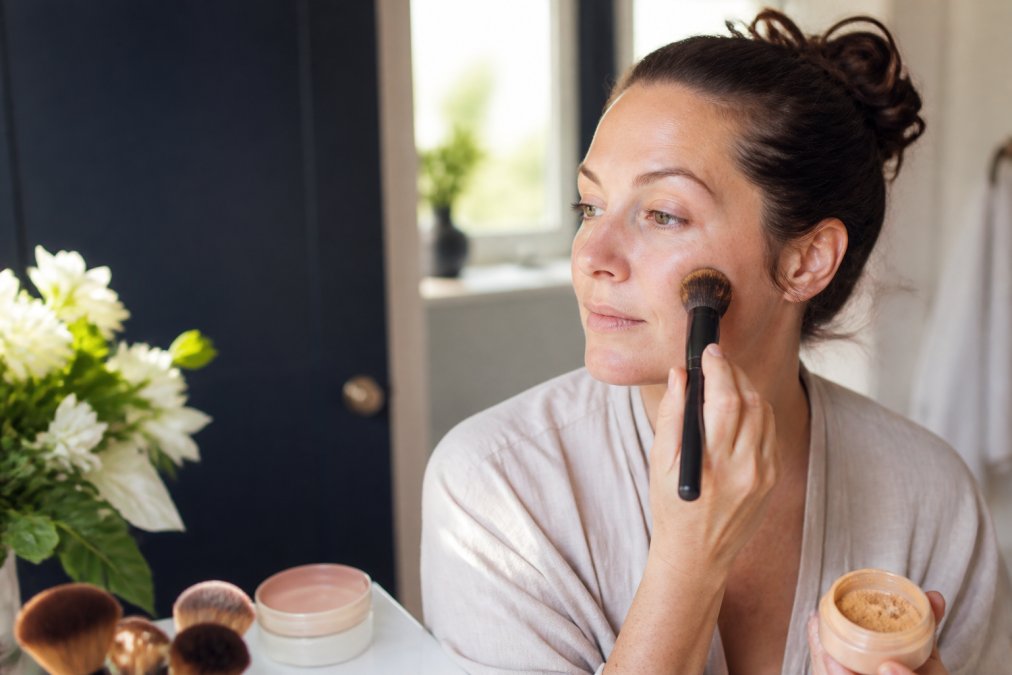
Start by assessing your current skin state honestly.
Is Mineral Makeup Worth the Switch?
Whether is mineral makeup worth it for sensitive skin depends on your current skin state, what you're looking for, and whether the formula you choose actually addresses your needs.
Frequently Asked Questions
What are the main downsides of using mineral makeup?
Mineral makeup can feel heavier than liquid foundations. Some formulas contain bismuth oxychloride, which causes irritation in certain people. Loose powder versions can be messy to apply and travel with. If you have very oily skin, mineral makeup may not offer the longevity you need. The key is testing a small amount first and choosing a formula designed for your specific skin condition.
What should I look for on an ingredient label if I have sensitive skin?
Look for products labeled non-comedogenic and hypoallergenic. Avoid synthetic fragrances, parabens, drying alcohols, and talc. Check for titanium dioxide and zinc oxide, which are generally well-tolerated mineral pigments. Seek out fragrance-free formulas and those free of sulfates. If you're experiencing inflammation or redness from treatment, avoid products with known irritants and opt for those designed specifically for sensitive or treatment-affected skin with full ingredient transparency.
Can mineral makeup provide full coverage for redness and irritation?
Yes, mineral makeup can provide buildable coverage for redness and uneven tone, but the level depends on the formula and application technique. Cream-based mineral foundations and concealers offer more coverage than loose powders. Layering a concealer palette under foundation helps neutralize redness without feeling heavy. For post-procedure or treatment-affected skin, cream formulas tend to work better because they don't emphasize texture or dry patches the way powders can.
Is mineral makeup suitable for skin undergoing medical treatments?
Mineral makeup can be a good option during treatment if you choose formulas specifically designed for sensitive skin and avoid common irritants like parabens, synthetic fragrances, and talc. However, everyone's skin responds differently to treatment, so it's important to patch-test new products and speak with your oncology or dermatology care team about what's safe for your specific situation. Products formulated without added fragrance and with full ingredient transparency give you the most control.